Starting with the album release of Black Background in 2016, Bad Angels has been one of the rare few Doom Jazz artists to come to prominence in the decade since. With a sound more akin to Doom Metal and Dark Ambient, this record is a must-listen for anyone jonesing for that ‘pure dread’ sound.
Enveloping walls of reverb play off of sparse instrumentation; noirish brushed drum loops, saxophones awash in haze, and the inevitable ‘ominous whooshing noise’ are all present.
Bad Angels is as much of a mystery as their sound implies. One of the only names I can pin within a mile of this project is Polish-based ambient artist Adrian Anioł, credited with composing and arranging the album. The Discogs, Bandcamp pages and social media channels all ultimately lead to nowhere, with the majority of information on Bad Angels coming from their own Bandcamp listings.
With that in mind, Black Background started out as the sound accompaniment to the visual art exhibition Not Even The Angels which took place on October 12th, 2011, with 32 tracks created specifically for the exhibition. Adapted for album release, Black Background was eventually released on November 11th, 2016. Paired down to 7 tracks, Black Background is full of Jazz and Industrial tropes dubbed out on reverb and delay.
I highly recommend giving this record a listen if anything said here has piqued your interest. As an aside, if you’re a big fan of the video game LA Noire, I’d also recommend giving this a listen.
You can find Bad Angels on streaming or, better yet, here on Bandcamp!
For fans of: Bohren & Der Club of Gore, Marek Zebrowski & David Lynch, Dale Cooper Quartet
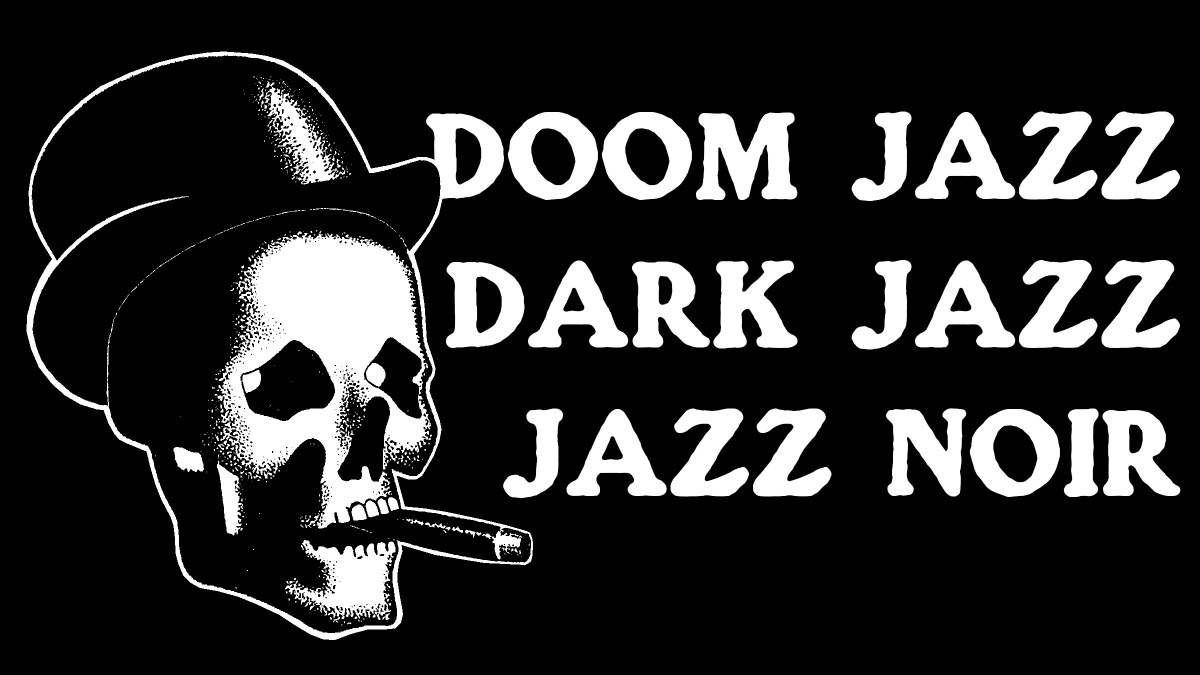
It’s time to draw lines. Here’s the actual difference between Doom Jazz, Dark Jazz, and Jazz Noir
It’s time to draw lines.
Dark Jazz, Doom Jazz, and Jazz Noir; each label is more evocative than descriptive at face value, yet all conjure a similar abstract image of foreboding, morose, and somber sophistication.
The term one prefers to use tends to come with a stylistic preference or sonic expectation within the genre. But simply using these terms interchangeably to refer to two or perhaps three distinctive compositional styles is growing old.
I’ve spent an unhealthy amount of time listening to Dark Jazz, Doom Jazz, and Jazz Noir playlists, reading Youtube comment sections and Reddit threads of recommendations when I could’ve been doing something useful with my life.
Here’s the actual difference between Doom Jazz, Dark Jazz, and Jazz Noir:
Doom Jazz
Rooted in Post-Metal, Doom Metal, and/or Ambient Music
Lyrical and aesthetic elements are more likely to contain Twin Peaks iconography, Horror iconography, and/or shock elements
Jazz Noir
Music that is first and foremost rooted in 20th century Jazz subgenres including (but not limited to) Avant Garde Jazz, Cool Jazz, and West Coast Jazz
Includes selected songs, albums, and film scores from the 20th century that have been retroactively catalogued
Lyrical and aesthetic content is more likely to elicit idealized notions of Film Noir and Neo-Noir film and literary genres
Dark Jazz
The most pervasive of the three distinctions
Seamlessly blends Jazz composition and modern Ambient in dark and somber ways
Simultaneously a crossover genre and an umbrella genre that encapsulates Doom Jazz and Jazz Noir
There you have it. If you can be bothered to make a distinction (and I think you ought to), there it is.
Which one will become the dominant strain or if any of them carry any momentum over the next few decades is yet to be seen. There’s still plenty of room for fresh and interesting work within the three distinctions.Keep an ear out! And support the artists you believe in!
If the concept of this album hasn’t already been beaten into you by a dozens of other bloggers, let me explain:
It’s a bunch of old ballroom music samples that are looped, and the ware, dust, etc. of the sampled material depicts the degradation and repetition of memory, especially as an affect of Alzheimer’s disease and/or dementia. Slather on spacious reverb to depict the darkness on the edge of memory, yadda yadda yadda and you have An empty bliss beyond this World.
Some perverse way of interacting with the past like making puppets out of corpses, as all sampling in a way is. But at its core The Caretaker- given name Leyland James Kirby- seems to hold a great reverence for time and a respect for its victims (as we all are).
While it does at times feel as if a Nurse With Wound record took itself way too seriously, The Caretaker strikes a fine line of dark conceptual music while being sonically approachable and accessible to a wider swath of people than NWW or other dark ambient works, for which Kirby should be commended.
Anyone who has seen Kubrick’s The Shining or a Jiri Barta film and thought ‘I want to go to there’ will revel in this album. Play it for them, or play it for yourself- It’s a worthwhile listen. Then you can always keep this record in the back of your mind, for when quaintness fades to black you’ll have a good record to recommend.
For fans of: Nurse With Wound, David Lynch, Arthur Fields
In a buzzy glow of lo-fi warmth comes Slow Blink’s Time Constant. Released last week on April 1st, 2022, Time Constant is the 4th full-length album by Chattanooga, TN’s Amanda Haswell through their Ambient project Slow Blink.
Performed live at Stove Works in Chattanooga on March 18th, and while less doom-laden than their former live album Pangea, Time Constant manages to enchant and haunt the listener in a doom spell of earthly contemplation.
The warmth of the analog tape loops mimic the environmental noise that one comes across in nature- be it deep in the woods, up in the mountains, by the ocean, or standing in a median of a parking lot looking at little strands of grass. Chords warp and swell past. Live instrumentation atop tape loops, like glockenspiel on the titular closing track Time Constant, is classic Haswell modus operandi.
In its exploration of time, Time Constant displays an absolutely mature, haunting beauty. If you enjoy lo-fi Ambient, you absolutely need to hear this album.
‘Audio. Visual.’ is the Resident Sound go-to for tv and film related music articles. In this installment, join Lubert Das as they attempt to become a music sommelier of sorts; serving cross-medium recommendations and top-choice pairings of music and other cultural works. Will Lubert serve you up a new favorite song? Something to flesh out your viewing-party playlist? Or the worst trash you’ve ever heard?! These are, simply put, 5 songs you might enjoy if you enjoyed the TV-show Broadchurch.
Part police procedural, part grief-laden small town drama, Broadchurch was a moody British crime show which starred David Tennant, Olivia Colman, and Jodie Whittaker to name a few. Whether it was the desolate downtown strip or struggling hillside church, the fictional town of Broadchurch often acted as the most important character throughout the entire series.
Like many of the show’s characters, you too may feel stuck in the vortex that is Broadchurch. The series’ third and finale installment may have ended in 2017, but there’s no need to fear! To hold you over just a little bit longer, here’s 5 songs you might like if you love Broadchurch.
Richard Hawley – The Ocean
What is there to say about grief? A lot, probably. But sometimes it’s just better to let it wash over you. If you find yourself getting drawn into the emotional swells of this fictional sea-side town, perhaps consider checking out Richard Hawley’s song The Ocean from his 2005 album Cole’s Corner.
John Murphy – In A House – In A Heartbeat
Me? I don’t need to explain anything! It’s YOU that needs to watch the opening of the series premiere of Broadchurch, then you’ll understand!
…Okay, maybe I need to explain that Broadchurch isn’t a zombie film, as In A House – In A Heartbeat is perhaps most recognizable as part of composer John Murphy’s score to 28 Days Later, and later used in 28 Weeks Later and plethora of other outlets. It’s a great song, and whether you’re currently watching or looking back fondly, you might enjoy this classic Post-Rock track.
Susumu Yokota – Long Long Silk Bridge
Arguably most in line with the original score for Broadchurch, multiple tracks from Japanese Electronic composer Susumu Yokota’s 2005 Ambient masterpiece Symbol could easily be substituted in for the show’s original score. Maybe now is a good time to admit I didn’t care too much for composer Ólafur Arnalds’s score for Broadchurch. It came across a bit hammy, a bit expected for a European murder mystery series.
Even with the use of somewhat ‘obvious’ orchestral samples- a jab I’ve seen lobbed at Yokota and plenty of other artists, and one that I take issue with- Yokota’s work feels more emotionally dense, more emotionally nuanced. Its lush beauty and slightly off-kilter delivery feels like birds of a feather with Broadchurch’s scene-establishing shots of a gloomy, sometimes desolate seaside town.
Seemingly the exception to Christian Rock, Starflyer 59’s Shoegaze era is full of songs to set adrift to. It’s got the dense waves of guitar you’d expect from Shoegaze and an abstracted sense of forlorn longing that matches right up with the atmosphere of Broadchurch.
Red Lorry Yellow Lorry – Strange Dream
This might be a strange addition to this list but if I wanna do this right I’m going to need to make some bold choices. For the more restless Broadchurch fans, I wanna recommend the song Strange Dream from Red Lorry Yellow Lorry’s first full length record Talk About The Weather (1985). The first minute and fifteen seconds of Strange Dream sounds like something out of some darkened Euro thriller/crime show, so what more could you want?
Under pummeling drum machine rhythms, the song’s “alone he ran” mantra and its hazy layers of guitar fit Broadchurch‘s lead detective Alex Hardy (David Tennant) and the case that still haunts him (season 2, baby!).
Warmth is a 2020 single release by artist Amanda Haswell under the alias Slow Blink. Based in Chattanooga, TN, Haswell’s slow hypnotic tape loops pull and morph themselves into a haze of melancholia. Warmth is, appropriately, a very warm track full of speaker buzz and fuzz. As with Haswell’s other releases comes the strong, controlling yet calming sensation of guided tranquility. At times introspective of the artist and the listener, and at times an external force- something as ancient as mother earth itself.
I can’t recommend it enough.
For fans of: Chelsea Wolfe, Grouper, Susumu Yokota
ロストエデンへのパス (The Path To Lost Eden) is the 2015 album by Vaporwave and Electronic psychedelic artists t e l e p a t h テレパシー能力者 and Nmesh, respectively.
With a 2 hour runtime, this behemoth of a split album forces even the most reluctant listener into its steady molasses groove. Massive layers of synth pads blanket the album in a lush fog, a defining feature I would eventually come to view as an intense dedication to New Age flaccidity.
Interrupting ロストエデンへのパス’s slow serenity are moments of jarring tackiness. E.g. the Nmesh produced 心はシダであります, in which punchy synth flutes dominate all sonic space. Other notably grating moments include a scattershot of speech samples; a litany of gritty male monologues throughout the album and the standout soft-pornographic dialogue of 体熱.
Copy from the album’s Bandcamp page sells Nmesh’s use of speech sampling as the following: “Fans of Nmesh will recognize his narrative-like composition techniques, with use of quotes to maintain a sense of cohesion between the different tracks and new age vibes…”, which posits that the most finely crafted art in relation to this album is the art of good copy.
By track 9 I had wished the album had ended by track 2. Nmesh never quite breaks away from or expands upon this sound, which by the time the album nears the 1 hour mark I can only pejoratively call it a ‘formula’. Chord progressions feel like an afterthought with each snippet of speech acting like a marker of time- more so a palette obstruction than a much needed palette cleanser.
I couldn’t have been more bored by the time the Telepath b-side takes hold. Not the ideal mentality to be in for the slow textural works of Vaporwave, particularly for a near 7 minute long soundscape.
Tacky synth flutes carry over to the album’s b-side, much to my disdain. But while remaining sonically complimentary to the Nmesh a-side, Telepath creates a degree of vigor which had previously been lacking.
The third Telepath song 東京の夜 blends percussive folly and synthetic instrumentation into a lush and rewarding track not topped anywhere else on the album. The use of processed vocal samples are intriguing here, especially after so many milquetoast speech samples across the a-side.
I wish Telepath’s contribution could have been more of a saving grace to ロストエデンへのパス, yet still has the shortcomings of a repetitive hour long work by itself. Perhaps if released on its own my view of the Telepath b-side would be more complimentary, but what doesn’t fix an hour of slow synth pads is more of the same.
In total, ロストエデンへのパス (The Path To Lost Eden) acts as a work of New Age Exotica by two white men- Nmesh, or Alex Koenig from Kentucky, and Telepath, or Luke Laurila from Ohio- and which at times uncomfortably strays into Orientalism.
While individual tracks have at times been intriguing to me, the album itself fails to expand upon ideas and emotions within the aesthetics both artists have stringently adhered to. There’s plenty of other meditative works out there to be explored, don’t worry about getting through this one.
For fans of: Macintosh Plus, Mandragora, Cobalt Road
Under the moniker Music For Sleep, artist Andrea Porcu’s 2021 release Music From A Sinking World is a beautiful and haunting work of melancholic tape loop ambience. Across seven vignettes or ‘short trajectories’ as music writer Peppe Trotta described it, Music From A Sinking World is like standing still in a cold marble gallery of a bombed out museum. The pieces themselves are distinctive and worthy of individual attention, yet contribute to the collective works’ melancholic and haunting potency.
The record is beautiful and haunting and everything else one could wish for in a masterful Ambient album. Originally recorded from March to October of 2020 and later recovered, each song on Music From A Sinking World takes a singular motif from an orchestral recording and amplifies subtle emotional qualities through a thick blanket of melancholia.
Acting like wind erosion on the listener’s perception of time, the work of Andrea Porcu feels at the behest of some greater current of the universe. Muddled melancholic loops spin like Ouroboros, bleeding out as reverb across any definitive point in the cycle. Andrea Porcu’s sculpting of tone and texture are beautiful, but it is the subversion of the listener’s perception of time, drenched in melancholy, which is the greatest takeaway of Music From A Sinking World.
Music is an art of movement, and so our perception of it is through the lens of time. How fitting is then that its end always sneaks up on the individual?
I really enjoyed Peppe Trotta’s description of this album, which is why I felt a need to quote them. “Brevi traiettorie” is just such a great way to describe the individual songs on Music From A Sinking World, so please go check out their review of the album on SoWhat Musica.
For fans of: Caretaker, William Basinski, Susumu Yokota
Iosu Vakerizzo’s The Temple is a post-exotica ambient terror show in which the exploits of Exotica have since turned over to the horrors of postcolonial reality. Memories of the deceased have now turned aggressor, a classic zombie-infested haunting in which the presence of the dead become apparent in the living’s absence. This is dark ambient music at its finest.
The Temple’s deathly eerie ambience straddles the line between ambient music and soundscape, creating a faux film score element or cinéma de l’esprit. The album’s focus first and foremost is on crafting its eerie aura, which it thrives in. Second to this is the album’s textural feel, and lastly, if ever relevant here, comes musical structure and rhythm. But it is this very ‘lack of presence’ (the presence of more traditional music qualities) which is utilized so effectively.
Vakerizzo’s crafted something particularly special in sonic-miniature. Iosu Vakerizzo’s work is similar to the short films of Jiří Barta, both in their aura and potency. The listener is left wanting more, but it is The Temple’s 16-minute run time which leaves the work both impactful and fulfilling.
The first 4 of 5 songs on the album could be considered the stumbling upon and exploration of the lost world of 1950s Exotica in its present state: resorts now dilapidated, villages abandoned. Exotica’s sonic luxury has since caved way to the unhindered passage of time and ensuing decay. It is the base of the mountain on which the inevitable reckoning of Exotica’s prior colonial approach will take place.
5th and final track Sacrifice To The God of The Mountain is this very mountain. The howling of wind intensifies as tension builds. The drum’s beating is now more present than ever. And before long, a doom wave of layered strings crash and crush down upon us. It’s incredibly heavy in a still way, reminiscent of early Doom Jazz. But it is this new instrumental presence, the weird to Mark Fisher’s eerie, which brings the outside back home.
Sacrifice To The God of The Mountain may quickly ratchet up the album’s previously slow growing tension, but doesn’t lose The Temple’s eerie touch with unwanted answers. The song stops, and the listener is left in deathly silence and grisly terror. In the end, it never quite does. The Temple haunts, lingers, and destroys any perceived innocence of the past.
Iosu Vakerizzo’s The Temple is a must listen for those looking for a new breed of ambient terror, doom, and sonic tension.
Scrap Book is the 2009 release by writer and Trunk Records founder Jonathan Benton-Hughes, professionally known as Jonny Trunk.
Disregarding greater compositional structure for works in miniature, Scrap Book is a showcase of dense textural collage. A series of vignettes, a pure charcuterie of sound. Notable standouts from which include the quaint K Piano, the mellow saccharine How Sweet It Is, and the deeply haunting and eerie Snowblind.
On Snowblind, Scrap Book’s clunky cartoon-ish revelry is displaced by the haunting, encroaching exterior world. To paint a mental picture, if Scrap Book was an ensemble-casted cartoon Christmas special in which everyone was snowed in together, Snowblind is a haunting foray into the cold and eerie outside. Disney could never.
While each track is its own little nugget of joy, Scrap Book as a whole will delight you with unease throughout the entire journey.
You can read a magnificent interview with Jonny Trunk over at Aquarium Drunkard.
For fans of: Raymond Scott, Robert Drasnin, Will Powers
Like Jonny Trunk? Give these a listen: Barbed, Mike & Rich, Krypto Grotesk

 The Resident Sound