An Interview With Grass Jaw

Grass Jaw is the solo recording project of musician and father Brendan Kuntz. The project’s 4th album Anticipation will be out November 5th, 2021 on vinyl and via digital download. Written and recorded while moving from Jersey City, NJ to Ithaca, NY, Anticipation blends elements of slowcore, alt-country and garage rock. The songs on this record reflect the tumult that happens during such a transition, covering depression, self-awareness, and super-anxiety that goes with parenting.

The following interview with Kuntz took place over email in September 2021.

You reached out to me through Resident Sound’s contact page, as occasionally happens with folks, and we started talking. Being an independent solo project you take on all artistic and business responsibilities yourself. What do you find to be the biggest struggle with getting through to people, be it artistically or promotionally, and where have you found success in this struggle?

Building an audience is something that took me a painfully long time to figure out. I played in a band in NYC from 2005 – 2015 and we didn’t play many shows (especially after the first few years) because shows usually were sparsely attended and seemed not worth the trouble. We all worked 9-5 jobs and had a hard time justifying being out until 4 to play to 5 or fewer people. After a while we mostly stopped trying, and would basically play only when invited by friends, which ended up happening more frequently out of town. During much of this time I was also in the process of trying to figure out how to function socially without alcohol, and it was very rare for me to go out and see other local bands, because it was uncomfortable to go out. In general, as a band, we weren’t really connecting with other people (and especially musicians) locally, so it makes sense that we didn’t have an audience.

Around 5 years ago, after my youngest son was born, I felt a strong need to get out of the house occasionally, and started seeing more live music. Going to a show, I would find I liked the opening band, or I would meet someone in the audience who played in a band or even just liked the same bands, and after a while it became shockingly clear what I had missed out on by not connecting with music people during that time. At first I felt a ton of anxiety about being the weird old guy at shows (especially basement shows!), but after a while it subsided. I lived in such a great music town, but for years didn’t really know or value local bands. It’s a little embarrassing. The other side of it is that eventually I did start going out more and more (of course still limited with a day job, 2 kids, and a wife who has her own interests) and meet a lot of people. Many of those people have been so supportive as I’ve started making my own music. I’m very appreciative of having music friends who share their own music with me, and will also listen to what I make. For family reasons I am not in a place to play live much or tour, and I know that’s an impediment to growing an audience much beyond where it’s at today, but I’m at peace with that (although I do hope to tour again someday when my kids are older, just to make more of those friendships in different places.)

Smaller musicians usually don’t receive the luxury (or burden) of having their entire catalog over-analyzed and ‘made straight’ by fans and journalists. What is the Brendan Kuntz / Grass Jaw narrative thus far? How did Grass Jaw come to be where it is now?

I’ve played drums for most of my life now (almost 30 years at this point.) I started playing with some kids in 8th grade in a band, and have basically played in some iteration of that band on and off since 1992 I think.  I went to school for recording and after college moved to the city to work in a recording studio.  I thought working in a studio like that was my dream job, but it ended up being one of the worst jobs I’ve ever had.  It left no time for playing music (or anything else) and also didn’t pay near enough to live on – it seemed like most of the people who were doing ok there had some other source of income or support.  After a while I gave up on it and found another job outside of music, and also started playing in a band again.

I love the group of people in this band, and love playing with them, but at different times in my life have felt like I wanted to have more of a voice than is typically afforded to the drummer.  Around five years ago I saw a show (it was Bad History Month) and the one guy in the band was singing, playing guitar and doing kind of a one man band thing on drums at the same time.  He’s one of my favorite artists and I was so excited to see him, but it was also kind of a realization that I could make music on my own and didn’t need to wait around or rely on any other people. So I basically just started writing some songs, and worked on recording them at home until I had an album’s worth. I asked for feedback on that first record from a trusted friend / bandmate and asked him to be brutally honest, and he helped me think about things like editing and crafting in a way that I hadn’t thought too much about as a drummer (like why am I bringing this part back, or what purpose does this section serve).

Listening back to that album now there are definitely some rough edges that can be hard for me to listen to, but I’m also proud of it as something that I set out to do and finished. It reminds me of a conversation I had with a friend about tattoos a long time ago – I was asking him if he still liked all of his tattoos, and he basically said he would probably make different choices if he were to do it over today, but he’s glad he has them to remember where he was at. On that first record I was really just figuring out how to do things. I made another one a year later that felt like it came bubbling out of me, like those songs just had to get out and I just needed to figure out how to translate them. And with each record I’ve made (this is my fourth) the process feels a bit more natural, and capturing sounds feels more natural, and it’s just amazing how things come together when compared with that first album where it felt like I was pushing a truck uphill.  


Many musicians have credited their environment (landscape, weather, crime rate, etc.) with influencing their sound. Do you find this to be the case with your music, and if so, how has the move from New Jersey to New York state changed your approach?

I grew up near where I live now and I’ve always had a bit of a country streak in me musically, so it’s hard to say when it comes out how much is from my current environment, and how much is just ingrained, but it is there. I think one of the biggest things that’s pretty easy to hear in the newest record (after the move) is the effect this past winter had on me. It was probably the bleakest winter I’ve ever experienced, and it affected my mood and songwriting deeply. There was one stretch of about a month where I was literally shoveling every day, often 2-3 times a day just to keep up, and it seemed like it was never going to relent. I was in a cold dark place physically and emotionally, and I think it’s pretty apparent when listening to it. 

For you, what has your identity in being a musician given you that you don’t find else where? How do you approach the dissonance of daily life (responsibilities) and the art life?

I remember being in middle school and feeling deeply unhappy and lonely, just feeling like I didn’t know where I fit in, and hating going to school and being ignored (at best) or bullied. Towards the end of middle school grunge became a thing, and there was a lot of rock music on the radio and on MTV, and I would come home every day after school and play (drums) along to some of those albums. After a couple months I heard about some other kids that were trying to start a band, so I asked if I could try out. The next year as a freshman in high school was so much better, because there was a thing I was good at and I had some friends who liked some of the same things and could spend time with. I still had a pretty typical high school experience with bullying and struggling to fit in, but it was light years better than it had been before I found music. To this day, almost all of my closest relationships have some connection to music, and I’m very thankful to have found it.

Around the time when my wife and I were expecting our second child we decided we needed more space to raise a family, and we decided to do some renovations to our apartment. We were fortunate enough to be able to also add some extra space for a music room. For the first time in my adult life I had a drum set and other music gear in my home and could play without having to travel an hour and a half to the practice space we’d been renting for years. Ironically, having a space to make music at home came just as our 2nd child was born and all of a sudden it became harder than ever to find the time to make music. That said, my wife and I have always been really good at giving each other the space to pursue individual interests and maintain friendships. Up until last year we both have tried to give each other a free weekend 3-4 times a year. I also work remotely, and have been fortunate over the years to be able to sometimes (when my schedule allows) spend my lunch hour working on a new song. But of course it’s hard trying to fit inspiration into those little windows. There have been lots of times when a melody or lyric idea will come to me when I’m with the kids or working, and if I can manage it I’ll pull out my phone and quickly record it into voice notes and hope it translates later on. Or sometimes there’s just too much else happening and it’s lost, and I have to just trust that more ideas will come.

You’re far from the first parent musician, but maybe that’s a journey one takes alone. Do you see your struggles and stresses in the work of past musicians? How has becoming a parent shaped your view of your own artistic work?

I honestly haven’t put too much thought into this, but I’m having a hard time coming up with many artists where there’s a clear connection between parenting and the music. I know there are lots of great musicians who had kids – one that comes to mind is Neil Young, I know his son had special needs that took a huge amount of focus and dedication, and it’s amazing that he was able to make any music for all of those years, but he was putting a record out almost every year, for decades.  I think he comes to mind first because we both had kids with special needs. It’s something that can take over your life, and it can be hard to maintain perspective.
 
One thing that is surprising to me is that I can’t think of much music that directly focuses on the feeling of being a bad parent, which I think is strange because it’s an extremely strong feeling that I think most parents experience. Or maybe it’s not being a bad parent, but not the right parent for your kid and working through that and trying to do better. It’s complicated, and it’s hard and it seems like a shared experience that could help other people with kids.

On a related note, I struggle with how much I should share about my own personal life, especially when it relates to my kids.  How are they going to feel about some of these songs when they’re older that are obviously about them, or about our relationship?  In a lot of ways, songwriting is a form of therapy for me.  When I’m writing music, it helps me process and think about what I’m feeling, what’s bothering me, what I want to change.  Sometimes it just helps me get a bad day out of my system.  I worry about how my kids might take those songs when they’re older, but I also want to be open and honest with them, because I want that kind of relationship with them.

A little question for people to nerd out on. What are you listening to? No cool answers!

Hmm, this is probably a “cool answer” but I am such a big fan of Exploding in Sound, and love almost everything they put out. It’s just automatic at this point that I buy every single thing they release.  The records they put out this year from Floatie, Thirdface, and Stuck have been in heavy rotation.  Last year it was Shell of a Shell, Dig Nitty and Knot. And the year before that there were records by Human People and Maneka that were amazing.


Non EIS records I love, Thalia Zedek – Perfect Vision, Squitch – Learn to be Alone, The Chives – THE CHIVES, Writhing Squares – Chart for the Solution, Frank & The Hurricanes – S/T

Regarding less cool stuff – lately almost everything I listen to is “new”, so it’s hard to say. I’m in my 40s, I don’t know what’s cool 🙂 As far as older stuff I just started to get back into Q and Not U. I always loved that first record but never really connected with the follow ups. A month or two ago someone suggested I go back and give the other albums another chance, and it’s just crazy how I missed it. I love it, especially Different Damage. As far as really old stuff, I can put on Thin Lizzy just about anytime and it’s an instant mood enhancer.

Hmm, what else? There was this one track thing a few years ago that I hope more people will listen to, it’s on Bandcamp, the artist is “Debbie” who I think is the primary singer / writer from Human People. I love just clicking through Bandcamp and finding new stuff.  It’s funny how many times I’ve wasted an hour scrolling through Netflix or whatever service looking for something to watch before bed. If I decide to instead spend that hour clicking / scrolling through Bandcamp, it is almost always a better use of that time. I also remember getting weirdly into Hawaiian teenage pop-punk around the time I turned 40.  There was a band called Aura Bora that had one amazing record.

Last thing –  my kids also love Weird Al (I’ve always had a soft spot for him as well) and it’s super fun to put on some of those records and just have fun with them and they are so catchy cause they’re based on radio hits that of course have great melodies, etc… I think one of my favorite lyrics of all time is actually from Weird Al’s I Think I’m A Clone Now; “I can be my own best friend and I can send myself for pizza” is hilarious but also kind of strangely dark and unsettling.


Last but not least, run what ya brung! Tell the people about your latest record Anticipation and where they can find it!

Thanks! Yeah, I am so excited about this record.  This is the first one I’ve done where every song is extremely personal, every song is part of my story, there’s no fiction or even really exaggeration.  This all happened to me.  There’s a lot of dark stuff on this record, but it does end on a hopeful note, and anyway, what kind of psychopath would be making a happy record after the last 18 months (or the last 20 years)?

It’s coming out on Nov 5th in all the usual streaming places, it’s also on Bandcamp and there is vinyl available as well for those who would like it.  I’m hoping to have a couple more features / premieres before the official release, and I will usually post that kind of thing on Twitter (@brendankuntz)

You can find Grass Jaw over at their Bandcamp, or find Brendan Kuntz on Twitter here.
Gone Fishin’: Self-Investment for Lifelong Music Fans

15 years into Spotify’s reign of terror the need to take control of one’s own cultural influence has never been greater. There’s never been a better time to invest in yourself, so why not get started on the thing that brought you to this site in the first place: your love of music.

Own, Don’t Owe

To pull a quote from Joe Steinhardt’s 2021 pamphlet Why To Resist Streaming Music & How, “They say streaming is a ‘don’t own anything’ paradigm, but it’s actually a ‘you’re always buying things’ paradigm. Spotify uses the same predatory business model as a store like Rent-A-Center to ensure you are paying to rent something for life that you used to be able to just buy once for a much lower overall cost.”

It wasn’t cheap convincing people to rent for life, but that’s how they’re going to make their money back.

Paid streaming subscriptions for music and movies are a hostage negotiation that only ends when you stop paying. Album taken down for any reason? Too bad. Album get’s altered after its release? Too bad. And let’s not get started on the reinvention of cable TV.

When you buy a record or movie, be it digital or physical, it is yours for life. Play it forwards, backwards, upside down. It’s your copy and it will always be there for you. Spending 10-20 dollars a month on Bandcamp or at a mom-and-pop record shop puts the money in the hands of your community and the artists you patronize, and out of the hands of problematic megastars skimming off pro-rata payment systems used by Spotify and other music streaming distributors.

Step away from endless playlists

I, for one, would argue that a 23+ hour ‘exotica essentials’ playlist has a lot of fat to be trimmed. It makes sense to be hesitant to switch to a so-called ‘limited’ listening model like owning your own music. But what’s more important: access to ‘everything’ or embracing what matters?

You’ll never come to fully embrace good work if you’re slogging through a sea of soundalikes. Sit down with an album, an EP, or a singular song and let it tell you its worth. Step away from the mindless streaming of soundalike tracks and embrace your own curated world tailor-fit for you, by you.

Don’t be afraid of albums

Knowing a little about a lot is a great way to explore culture and tastes, but don’t be afraid to commit to buying albums. In the digital age, every song is now a single. No longer encumbered by needle dropping or blindly winding tape, we have a world of b-sides and gems hidden across massive discographies that are ready to be unearthed. Yet many of us never listen to the full album. 

Maybe the idea of spending 7 to 10 bucks on a singular album is daunting. What if the album isn’t all that worth it? While sites like Youtube are a great way to discover and decide if you like an album before buying it, they’re not an ethical substitute for owning music. Aside from an onslaught of ads interrupting the music, the streaming royalties through Youtube will never reasonably be enough to support the artists whose work you enjoy.

The truth is many releases aren’t worth the money for the full album. That’s why we leave reviews, share with friends, and read blogs. But I say where there’s smoke, there’s fire. If you’re a deep fan of a select few songs on the album, you’re most likely going to enjoy the rest. So instead of checking out another bloated playlist, try revisiting albums which you already enjoy a few songs from.

Really enjoying 3 songs off Kimono My House? Trust me, buy the album. Only heard 2 of 5 songs on the EP but you enjoyed them? Trust me, buy the album. You don’t need to know the artist’s full discography, a good album stands on its own.

Consider an external disc drive

While Steinhardt’s accusation of Apple phasing out disc drives to force people into supporting a streaming model is seemingly unsubstantiated, the likelihood of computer manufacturers bringing them back any time soon is slim.

CDs are incredibly cheap for any artist to produce, and with a massive (and inexpensive) second hand market CDs are financially accessible for many people. Many albums have only ever existed in their initial release, and while the vinyl resurgence is allowing hidden gems to be re-discovered, there’s still many albums only accessible in their original compact-disc release.

Why let ‘the man’ hold you back? Invest in a $20 disc drive and open the door back to an entire world of media. 

Find what you really care about

Finding the music you really care about takes time. In our culture of fast fashion, Instagram posturing and trend following, taking time to cut through to what you truly care about is an important investment in yourself. Learning to be adaptable and open to new things allows us to become our best selves over time, but we need to learn how to do so in spite of fast-fashion trends: be it clothes, music, attitude, or the all encompassing ‘subculture revival’ trends.

Enrich your life by investing time and money in the music that suits you best. What songs do you get the most out of? Feel it through and accept no substitutes. Artists, albums, and songs that resonate with you shouldn’t be sloshed about in a sea of imitations, knock-offs, and general ‘sound-a-likes.’ Reel ‘em into your life, and keep on fishin’.

The Crumb Pile + Brief Thoughts on Adding Value as a Music Commentator

Is this all I am to you? Words on a screen? Consumable content? If so I’m delighted you’re reading this, for one. And two, I would be achieving the basic goal for contemporary music media.

Contemporary ‘music media’ is an extension of the music-based lifestyles we buy into. Much of the time it’s forced positivity in the age of hype; a digital onslaught of quick consumable media reassuring our tastes, opinions, and associations to the point of borderline enforcement.

Hype-content, alongside its contrasting partner hate-reviews, feels vapid. And this content flows through our social channels at a torrential rate.

We’re consuming crumbs out of couch cushions to sustain ourselves culturally. While my love for the obscure and irrelevant has allowed Resident Sound something different from other outlets, it only adds different crumbs to the pile.

The bar is incredibly low here. But how to provide value as a music commentator in the most effective way possible still alludes me. I turn to critics, thinkers, and just about anyone who is smarter than me. Who brings value to my life? How do they do it?

Of all music commentators, a favorite of mine (and many, I hope) is Oliver ‘Oli’ Kemp, better known as DeepCuts on YouTube. Kemp has slowly built a catalog of artist discography guides, genre introductions, reviews and discussion topics among other work. His passion and intellect surrounding his choices are both thrilling and insightful while remaining accessible for nearly any viewer.

DeepCuts is “a channel dedicated to music, for lovers of music” and is essential viewing for any would-be music commentator. Whatever lesson is to be learned here I’ve yet to fully embrace it to my own liking, but I hope to get there soon.

But like DeepCuts, the output at Resident Sound has dropped significantly, in part due to the jobs that pay the bills (or pay anything). It is more or less a 1-being team at the end of the day. But with this time I hope to discover what brings value to my life as a consumer and what I can in turn offer to you, the reader.

If you enjoyed this, consider checking out more +Brief Thoughts pieces on the Resident Sound blog.

Looking for a music recommendation? We highly recommend these:

REVIEW: Kaputt – Carnage Hall (2019)

REVIEW: Susumu Yokota – Symbol (2005)

REVIEW: Oxbow – Serenade in Red (1996)

5 True Crime Podcasts Worth Your Time

10 years ago, interest in true crime was still somewhat taboo, podcasts seemed like a novelty, and no one had yet seen the full potential the medium had to offer. But things have changed. Now you can listen to some of the most intriguing mysteries to have ever occurred. All of this spurred on by the medium’s high-accessibility, mass free listening, and social media sharing.

The number of true crime podcasts have boomed. Along with a cesspool of edgy cash grabs and ego based hosts, the true crime genre has spawned some of the greatest podcasts of the early years of podcasting. With so much to choose from, Resident Sound has picked our top 5 true crime podcasts worth your time.

The Doorstep Murder

Alistair Wilson was shot to death on his doorstep in Nairn, Scotland on November 28th, 2004. But now questions remain. Who did this, and why? Host Fiona Walker walks us through the fatal night in question connecting a family in mourning, community fears, and a mysterious blue envelope addressed to an unknown “Paul.”

Originally uploaded as a 6 part series in 2018, The Doorstep Murder received a follow up episode in 2020 when Alistair Wilson’s son appealed for more information regarding his father’s case.

You can check out the show over at BBC Scotland or find The Doorstep Murder where ever you listen to podcasts.

Criminal

As their Apple podcast bio states, “Criminal is a podcast about crime. Not so much the ‘if it bleeds, it leads,’ kind of crime. Something a little more complex. Stories of people who’ve done wrong, been wronged, and/or gotten caught somewhere in the middle.” It does what it says on the tin, folks! But it also does so much more.

“I’ve always thought that a real true crime fan listening to Criminal might be a little bit disappointed… …It is a true crime show but it’s also just a show about the human experience,” said Phoebe Judge in an interview with the CBC.

Host and co-creator Phoebe Judge and co-creator Lauren Spohrer craft human stories; stories of antiquarian book thievery, community gambling, and of stopping crime with a concrete Buddha statue. Some episodes more serious (and darker) than others, Criminal is a low-commitment, high-quality podcast with at least a dozen episodes for anybody.

You can check out Criminal at their site, This Is Criminal or find their podcasts where ever you listen to podcasts.

Devil’s Teeth

Devil’s Teeth is an ongoing investigative true crime podcast searching for answers in the 1972 death of 16 year-old Jeannette DePalma in Springfield Township, New Jersey. While allegations of occult activity, drug overdosing, and suspiciously missing case files weave in an out, certain episodes are dedicated to some of the area’s tales of tragedy and how they bear similarities to Jeannette DePalma’s case.

Devil’s Teeth creator and host Jesse P. Pollack debuted the podcast on December 20th, 2015 in a follow up to his book Death on The Devil’s Teeth: The Strange Murder That Shocked Suburban New Jersey which was published earlier that year. Pollack has worked previously as a correspondent for Weird NJ magazine, a cornerstone for fringe interests in oddity, mystery and… well, the weird.

While earlier episodes slightly suffer from mixing and varying audio quality it should be considered that this was only a year after the massive success of true crime podcast phenom Serial. 3 years prior, most people I had talked to didn’t know what a podcast was, let alone the appeal of the medium. Likewise, prior to Serial the whole true crime genre was considered taboo; an interest of flippant degenerates and ‘columbiners’ alike. Since then, Devil’s Teeth has drastically improved with each episode being a step up in audio and production quality.

You can find Devil’s Teeth on Apple Podcasts, Spotify, and other podcast apps. Be wary of spoilers, but you can keep up-to-date with the podcast at Devil’s Teeth on Twitter.

Lost Hills

Sometimes the best of investigative true crime podcasts have less to do with the crime and more to do with the story told along the way; the self-insertion of the investigator within the greater narrative. Clues and connections are made, and unfold upon the investigator. Not to invoke an image of Hunter S Thompson or ‘gonzo’ journalism. True crime involves a degree of tact, empathy, and professionalism that many true crime podcasts such as My Favorite Murder can’t be bothered by.

Lost Hills podcast is created and hosted by Dana Goodyear, a staff writer at The New Yorker among many other things. Goodyear explores Malibu in the aftermath of a murder. In 2018, 35 year-old scientist Tristan Beaudette is killed while camping in Malibu Creek State Park. What unfolds is a web of cover-ups, unsolved shootings, and mental illness amongst a cast of Californians at the crossroads of life, loss, and corruption.

You can check out Lost Hills at Pushkin Industries, or find their podcasts where ever you listen to podcasts.

Death In Ice Valley

The unidentified body of the Isdal Woman remains one of the most intriguing mysteries of the Cold War era. Who was this mysterious woman, and what was she doing in the foothills of Bergen, Norway when she died?

Debuting in 2018, NRK host Marit Higraff and BBC host Neil McCarthy guide the listener through a cold and rainy landscape to try to identify the Isdal Woman, her occupation and whereabouts leading up to her death. Death in Ice Valley’s sound design is simultaneously subtle and engulfing. When the hosts are out in the rain, you feel it. When the podcast let’s you back inside, the eerie sense of the mystery and Cold War paranoia sticks with you.

Death in Ice Valley is one of the best true crime and mystery podcasts to ever exist. If you were to listen to all of these, listen to Death in Ice Valley last as you will be spoiled by its high-quality, long arching story. Follow up episodes are made along with updates in the case. This lead to the 2019 episode Turning Detective – Live, in which Higraff and McCarthy comb through listeners’ leads and theories.

You can check out Death in Ice Valley over at the BBC or find their podcasts where ever you listen to podcasts.

A Proposal for 80s Worship

This post originally appeared on the 10th Dentist blog on Tuesday, March 4th, 2021. The following version has been lightly edited for clarity.

    As if standing in stark contrast to taco-laser-cat t-shirts and ‘millennial whoop’ overdosing (how noble), the rise of 80s worship in the mid-teens has brought back the worst of bad hair days and their musical counterparts. So if you’re looking to spice up your new-found identity or if you’ve finally realized that Africa by Toto isn’t worth it, than this list is for you!

Soft Cell – The Art of Falling Apart (1983)

    Soft Cell (a band that, yes, has released more than 2 songs) started in 1978 and rose to prominence in the early 80s with their hit cover of Gloria Jone’s 1964 single ‘Tainted Love’. But enough of that. 1983 would see the release of Soft Cell’s second full-length release The Art of Falling Apart and the glory of it’s titular closing track. ‘The Art’ is a song about drugs that isn’t trying to be anything other than a song about drugs. Big synth stabs and an under swelling reverb makes this a ‘no duh’ for anyone looking to dip their toes in the weird and wacky world of the 80s (FOETUS is only a few steps away from here).

Naked Eyes – Promises, Promises (1983)

    There is always something there to remind me that there were much better songs on Naked Eyes’s 1983 album Burning Bridges. The best album to ever be recorded at Abbey Road Studios (Flippant? Maybe. The truth? Definitely), Burning Bridges gave us great songs like its titular track, When The Lights Go Out, Fortune and Fame, and Voices in My Head. But it’s Promises Promises with its minimal production, back and forth melody, and vague funk influences that rounds out this album as one of the best closing tracks on a pop album ever. Naked Eyes is 2 British guys, a Fairlight CMI, and a lot of vague romantic dance tracks. Do I need say more? Well, except to clarify I mean that entirely as a good thing (in this case).

Orchestral Manoeuvres In The Dark – So In Love (1985)

     So In Love may not be stupid enough to meme-ify, but it’s an emotionally powerful song with all the melancholic nostalgia seeding you could possibly want. In this dreamlike state, you may feel as if your feet will lose rhythm to it’s smooth dance beat as you float away off the dance floor. Don’t worry, no modern DJ will be playing this any time soon, and your drinking that night will likely leave you face first on the floor. Look, were they a great band? No, not really. But if we’re going to collectively obsess over singular 80s pop tracks, OMD has all the trappings (and just enough good songs) to get a mention here.

Sharon Redd – Can You Handle It (1980)

    While you were busy fetishizing the 80s, disregarding the AIDS epidemic and the CIA starting a racialized drug war, black and/or queer people were out there making some of the best music of the decade. If you’re looking for peak 80s (in a good way), this is it. Just because it’s not Madonna-white doesn’t make it not so. So, can you handle it?

    You may think, ‘why Sharon Redd? Why not something even more 80s like Chaka Khan, Cherrelle, Evelyn King, etc.?’ Those artists are amazing, but they’ve all had second-winds in the age of music streaming and cock and bull ‘I grew up with this’ nostalgia boasts. Either way, if you’re a trend sycophant than you’ve probably stopped reading a while ago. So kick back and enjoy this 6min+ jammer.

General Public – Anxious (1984)

    Why are we culturally pining for the 1980s to begin with? Has sociopolitical pressures made us look for a ‘simpler time’?  Is it 70s babies grasping for a time that they were the forefront of commercial culture? Can we simply blame all of it on vaporwave and Stranger Things? Who knows. Maybe culture is dying. In a press-play world that awards content and volume over quality and craft, why would anyone take the time to enrich their lives culturally? It may be my upbringing that put General Public on this list, but if the 80s are relevant now, than a track like Anxious is more relevant than ever.

5 Twin Peaks Inspired Albums Worth Your Time

Twin Peaks inspired music is everywhere. By now, you’re probably well familiar with David Lynch’s 1990’s cult-classic turned pop-culture phenom. Whether searching for classic shows or just minding your damn business, Twin Peaks iconography is everywhere. Composer Angelo Badalamenti’s score would go on to influence the creation of doom jazz, inspired parody and thousands of musicians. Much like David Lynch, Resident Sound doesn’t like to be too obvious. So while you won’t see Xiu Xiu’s tribute album or the doom jazz stalwarts Dale Cooper Quartet here, get ready to strap in and hear 5 Twin Peaks inspired albums worth your time.

If you’re looking for a refresher, or better yet for someone to explain the entirety of Twin Peaks’ meta-narrative, well, Youtube channel Twin Perfect has you covered:

Now with that out of the way, here’s 5 Twin Peaks Inspired Albums Worth Your Time

1: Messer Chups – Twin Peaks Twist

Saint Petersburg, Russia’s Messer Chups are the campy horror surf scene’s crown jewel. Often interchangeable with Messer für Frau Müller, the band they originally spun-off from, Messer Chups’ Twin Peaks Twist is a 4 song EP of campy surf tracks. Starting with a slow then fast, off-and-on reworking of the Twin Peaks theme, the EP culminates on Eduard Artemyev’s theme from the 1974 Soviet Russian epic Siberiade.

2: Liquid Rainbow – The Blue Rose Sessions

In reference to Lil in Twin Peaks: Fire Walk With Me, The Blue Rose Sessions are a synth-heavy, spaced-out, post-rock extravaganza. Outside of just being Twin Peaks related (and tolerable), the album blends strange elements in a masterful way. Track Morning Joe mixes heavy vocoder-esque synths, jazzy drums and guitar, organ and banjo in such a way as to make itself almost as distinct as Angelo Badalamenti’s original iconic score. Pulled from the album’s listing on Bandcamp, “This album is inspired by the Art and visionary Genious of David Lynch and Mark Frost… …We’ll keep on dreaming and scrutinizing the Mysteries.”

3: Côte Déserte – Dale Cooper’s Case

Having more in common with its doom jazz predecessors, Dale Cooper’s Case is a piano heavy noir triumph. The half Saint Petersburg, half Moscow based duo Côte Déserte originally released Dale Cooper’s Case in 2011, and followed up the album with Strange To Look At Her. It Seems That… in 2014. Like the best (and all the rest) of doom jazz, the Côte Déserte Bandcamp page has remained more or less abandoned since 2014.

4: Silencio – She’s Bad

It says it right there on the tin, folks: “more music inspired by the works of David Lynch & Angelo Badalamenti.” But all you need to do is press play and the influence is immediate. She’s Bad is part Portishead, part April March, part Messur Chups, part… um… huh… Actually, the album is stylistically all over the place, and if there is any one thing it can be called it’s Twin Peaks-y. Get ready for some twangy guitar.

5: El Sonida De Reposa – Pink Room / Just You

To pick a Twin Peaks song so notoriously hated and farcical and then decide to to record and press it to vinyl as a single has to be one of the more interesting choices within Twin Peaks inspired music circles. But what else is there to say? It’s a good record. If you ever wanted to hear a version of Just You that didn’t include Twin Peaks most-hated character James Hurley’s high-pitched awkwardness, well, this record is for you.

Honorable Mention: Black Market – Welcome To Twin Peaks

Twin Peaks reggae dub, anyone…?

If you enjoyed this, you may enjoy Resident Sound’s Guide To The Fast Paced, Lighthearted World of DOOM JAZZ

TAKE VIBE: An Interview with Laurence Mason

Laurence Mason is the mastermind behind Take Vibe, a reworking of the Strangler’s Golden Brown (a post-punk meets baroque pop ode to heroin) in the style of Dave Brubeck’s Take 5 (written by saxophonist and composer Paul Desmond and first released in 1959 by Dave Brubeck Quartet). A demo and later de facto music video for the single reached viral status clocking in multi-million views and sparking interest in the opposing bands’ work within their counterpart’s audiences.

The original demo video, uploaded May 11th, 2020.

The following interview with Mason took place over email on April 21st, 2021.

The original demo was a hit, now with a little over 4 million views. Then the 7” is pressed and sells out. Did you know there would be such a strong audience out there for a Take Vibe type concept? What would you say is the make up of Take Vibe’s fanbase?

The only reason I thought people might click on it is because it’s the sort of thing I’d want to watch. That’s what an audience is really though isn’t it, a group of like-minded people who share a common interest with the creator. What I didn’t realize, and still struggle to comprehend, was how large that audience would be. The whole thing was very much a case of right place, right time – people seemed to be finding my video from lots of different places. There were visitors who had found it from searching for Dave Greenfield pretty early on, which of course was the initial reason I’d made it. Golden Brown had been used in an episode of a Netflix series called Umbrella Academy, and also in a film called Baby Teeth round about that time too. Then later on in the year it would have been Dave Brubeck’s 100th birthday so people were finding it through that.

In a roundabout manner of reaching out to you, I spoke with Jazz Room Records “Head Honcho” Paul Murphy. What was it like getting to work on the album? Could you run through the process of how the record was made?

The entire thing was done at my dining room table. I was moving house at the time of making it so I had limited equipment I could use, with most of it being packed away. This lo-fi setup was great because I wanted it to sound like it had been recorded 60 years ago, the idea of studio quality went out of the window and I was adding effects to make it sound grainy and old. For the release, the drums and bass were re-recorded so we weren’t using any samples as I had done on the original video, these were played by John Settle and Josh Cavanagh-Brierley. I ended up playing baritone sax for the B-side, “Walking On The Moon”. I’d been listening to Gerry Mulligan’s Night Lights album so it was a little nod to that. 

The jazz and post-punk connection has been made before, most notably with certain No Wave adjacent groups like Lounge Lizards, James Chance, and later with the lounge group Nouvelle Vague. Even then, I don’t believe there’s ever been a more direct connection between the two worlds, especially recently. Is this new terrain you’re hoping to explore further, or has the statement been made?

The connection I made was between the two songs (Take Five and Golden Brown) rather than looking at it from a perspective of connecting two genres. For a long time I’ve heard musical similarities between both tracks, and I’m not the first person to have done that, but the way I presented those similarities was the way I was hearing them. There’s definitely more terrain to explore in that field, but I’ve not yet found a pair of tunes that click together as well as those two did.

The idea of working with other people’s material, covering it, or of there being music ‘standards’ has really fallen out of popularity. How does a musical piece as a commercial entity transition into the greater cultural narrative, especially surpassing the original writer or performer?

Wow! Right, I’ll have a stab at that one… My thoughts are that it comes down to purpose versus right. Whether or not a statement (be it music, art, a campaign, etc.) has a right to exist in culture is entirely up to the individual who is on the receiving end of that statement, but its purpose to exist (and ultimately its success) is decided by society. The best example I can think of is Tracey Emin’s bed. On one side of the room you’ve got the people who say it really strikes a chord, the people who nominated it for a Turner prize, the people who actually bought it… Then on the other side you’ve got the people who say “Well that’s rubbish, I’ve got one just like that at home.” But its purpose in culture transcends what any individual thinks of it because society has decided that it has a place to exist in conversations, discussions, and arguments. So much so that on the mention of modern art, most people will bring up an image of an untidy bed in their minds. On the subject of using other people’s material for their creations, I think its use needs to be justified – what purpose does it serve in its new setting? Its right to be reused is up to the opinion of the consumer, but the decision of society on how well it has served its new purpose will govern its success in culture. That got deep.

Punk can in many ways be referred to as the great reset on music. With lower bars of entry, for both artists and consumers, how does jazz with a relatively high bar of entry stay relevant and keep forward momentum with younger audiences?

Look no further than YouTube for that – creators like Adam Neely, Aimee Nolte and Charles Cornell cater for young people wanting to learn about jazz, particularly jazz music theory, and it makes up an incredibly large audience on YouTube. Making something that previously seemed untouchable available to the masses is probably about as punk as it gets.

A little question I like to ask people I’ve just met, what are you listening to? No cool answers!

At the moment I’m listening to a lot of 90s RnB but that’s for a project I’m working on with someone. I’ve got Radio 6 on whenever I’m driving, I love Mary Anne Hobbs’ show.

Last but not least, ‘run what ya brung’ as they say where I’m from. Let the people know what you’re working on and where they can find you!

My next project involves a 100-year-old bass saxophone and some Leeds-based brass players. If that’s whet your appetite just type Laurence Mason into YouTube to find my channel, there’ll be some stuff up there soon about it.

You can find Laurence Mason’s Youtube account here or head on over to Jazz Room Records.

Wanting more strange jazz pastiche? Well you should check out Resident Sound’s Guide to The Fast Paced, Lighthearted World of DOOM JAZZ.

In Memoriam: Cesar Alexandre, + Brief Thoughts on Legacy

The news was broken to me last night that Cesar Alexandre, the person behind Lindsheaven Virtual Plaza and Mount Shrine has passed away from coronavirus.

I never met or talked to Cesar Alexandre. I was well aware of their underground-classic 2013 release Daily Night Euphoria EP, at times serving as the high-water mark within vaporwave (at least from an outsider’s perspective). Lindsheaven Virtual Plaza was an early building block to vaporwave culture, strengthening the legitimacy and legacy of those that came before it while simultaneously expanding the potential and outreach of the genre as a whole.

The idea of legacy within music can be complicated. Usually a word saved for the most famous of artists. But Dave Brockie’s death in 2014 wasn’t lost on me, and neither was Randy ‘Biscuit’ Turner’s death to the Austin, TX scene when I visited nearly 15 years after the fact. In the same way, Cesar Alexandre’s legacy will not be lost on the vaporwave community.

The enrichment of our collective cultures depends on artists and the work they do, regardless of the medium or stylistic movements in which they work. And with that, let’s remember the legacy of Lindsheaven Virtual Plaza, Mount Shrine, and most importantly Cesar Alexandre.

“The night isn’t young anymore.”

*UPDATE 4/19/21* Proceeds from NTSC Memories by Lindsheaven Virtual Plaza will go to the artist’s estate. You can check that out here: https://tigerbloodtapes.bandcamp.com/album/ntsc-memories

CHASING GHOSTS: AN INTERVIEW WITH LOST RPM’S JEFFREY HARVEY

Whether chasing ghosts or appreciating novelty, the ‘lost to time’ element of dollar-bin records can leave their songs steeped in melancholy. As vinyl continues to wade further back into the mainstream, the previously murky world of thrift vinyl collecting has been cast into the light of social media; documented and showcased for any passers by.

I recently fell in love with the Instagram account Lost RPM during the pandemic’s ever growing hours at home. Lost RPM is DJ and curator Jeffrey Harvey’s showcase of notable finds, most only known to the artists themselves and few seasoned vets of the thrift record collecting world.

To get a better idea of what drives the record thrifting mindset, I reached out to Jeffrey Harvey of The Lost RPM Podcast and Instagram account to explore their place in the record collecting scene. The following interview took place over the course of about a week via email.

Jeffrey of Lost RPM: 

Hey [Lubert]! It’s Jeffrey. Good to meet you. Fire away on Q’s and I’ll try to answer as best I can!

Lubert:

Hey Jeffrey! Good to meet you too. Let’s get started.

You run the Instagram account Lost RPM and the coinciding Lost RPM Podcast. I see that the earliest Instagram posts at this time go back to 2015, though the focus wasn’t always on 45s, but mostly LPs. Incredible but strange records like Sister Janet Mead’s ‘The Lord’s Prayer’ and Robert Pritikin’s ‘There’s A Song in My Saw’. What led to the switch to covering 45s more or less exclusively?

Jeffrey:

That’s a great question! I moved from Kansas City, Missouri to Los Angeles in 2013 to get married. I had been collecting interesting-to-me records in KC since the early 2000s, with most of my collection coming from thrift stores, junk shops, flea markets, and record store clearance bins. I was very passionate (and still am) about finding cool records that someone else has literally thrown out!

Anyway, when I arrived in LA I didn’t have any professional plans or goals per se, so that led to copious amounts of time continuing my second-hand record search. I was able to get to know the city by starting the day at a Pasadena Salvation Army and ending the day at a Van Nuys Goodwill. Along the way I’d look for LPs/45s/78s that looked interesting, were privately pressed, or unknown to me at the time.

In Kansas City 45s are everywhere. You go into any thrift store and there are at least a few stacks of 45s – even if they’re all crap. In LA I found that 45s at thrift stores are virtually non-existent. That led me to finding a lot of stuff like the Sister Janet Mead and Robert Pritikin LPs. I’d find a handful of $1 private press LPs during a day out digging, get ’em home, and spend the evening trying to figure out if they were any good or not. It helped that recreational cannabis was just starting to become legal in Southern California lol. After a year or so of SoCal second-hand record digging, I started kicking around the idea of starting a blog about my finds. That’s how The Lost RPM Instagram page came about.

Interestingly enough, my run of posting primarily 45s didn’t start until the pandemic kicked into high gear in March of 2020. I ordered a 45 on Discogs from a seller who had like 16,000+ records for sale, and casually mentioned that if he had any “not on Discogs or ungoogleable records” lying around that he wanted to get rid of, I’d buy them off him in bulk. To my surprise he said he did, and that he’d be down to sell to me. So for the past year I’ve been receiving boxes of 100 45s once or twice a month. I can’t tell you how much it helped me mentally during the pandemic, and receiving all those singles actually kickstarted the idea of The Lost RPM Podcast. That’s the entire reason my IG page has transitioned to mostly all 45s.

Lubert:

16,000 records is a LOT of records. I can’t imagine some of the strange stuff that seller has. 45 collecting alone has its niches from Georgia gospel to absurd novelty, Philly soul to stabs at country stardom. You seem to span the gamut. Are there any particular niches you swoon over? Any genres you’re looking to explore further?

Jeffrey:

It’s interesting, when I was in high school I was pretty chubby. I tried to cover up my self-consciousness about my weight with being the class clown. Being the class clown led me to becoming friends with all types of people in my school. Punk rockers, jocks, cheerleaders, art kids, outsiders, and even teachers. I didn’t really have a specific friend group or click that I was a part of, and as crazy as it sounds I honestly feel like that experience somehow translated into my record collecting. I don’t really seek out one specific genre, I just like what connects with me. I actually believe that in most cases records are meant to find me, rather than the other way around.

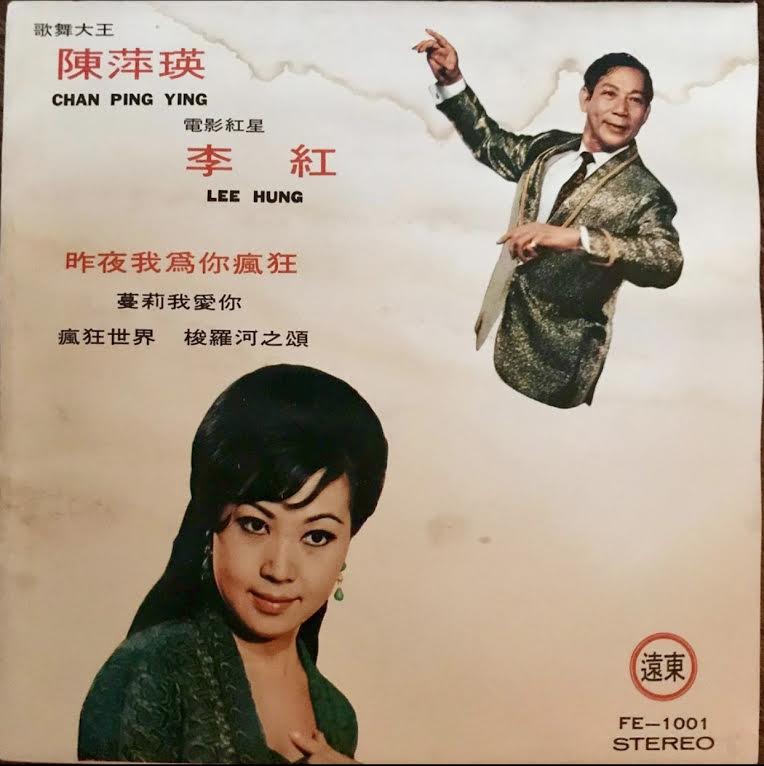
Case in point: I was at a Salvation Army in the LA area a few years back. I had just found a handful of really cool LPs, and as I was exiting the store on a digging-score high, I saw two Asian gentlemen loading up a cart with records to donate. I walked up to them, told them I collect, and asked if they wanted to sell to me instead. I think I paid $15 for a few boxes of LPs, 78s, and 45s. I had no idea what was in the boxes. I didn’t even care. I just knew if something needed to find me, it would. Most of the stuff ended up being useless to me (and was even donated back to the Salvation Army from whence it came lol), but one of the few items I kept from that haul ended up being this amazing, unknown, and seemingly one-of-a-kind 1960s Hong Kong pop 7″ EP that may or may not be from a feature film. I can’t find any info on it. All I know is that there’s a track on the disc that absolutely floors me. It sounds like it was recorded in an opium den, and I’ve never heard anything like it since. What are the odds of all the factors coming together in that scenario for that record to find me? I have to think they’re pretty astronomical. I cherish that 7″ EP and the fact that it found me! I’ve attached a pic of the release and mp3 of the track if you want to check it out.

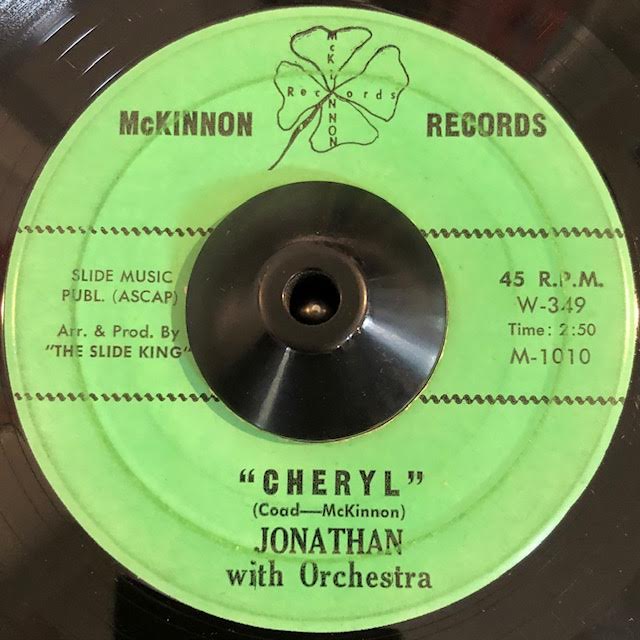
As far as stuff I swoon over, that would definitely be 1950s/60s American outsider teenage ballads. It’s total time capsule stuff. I have a 45 by a group called “Jonathan with Orchestra” that is a perfect example of waaaaaay outsider teenage balladry. It’s called “Cheryl” and it’s one of the most amazing & endearing things I’ve ever heard. The kid (presumably Jonathan) can’t even sing. His voice cracks heavily throughout the recording, and there’s even some amateur saxophone playing involved. It’s all so innocent and primitively debauched at the same time. It’s like something you’d hear at a high school prom in 1957, if the prom was held at an insane asylum. I’ve actually found a fair share of primitive, obscure, outsider teenage singles from the 50s & 60s, and am always down to welcome more of them into my life. Again, I’ll attach a pic of the label and mp3 of that one for your consideration.

Lubert:

I just listened to both of these records and they’re great in their own ways. The Hong Kong record reminds me a bit of the bossa nova influence on easy-listening pop records. Really high quality writing and production. But this Jonathan record, well it sounds like James Hurley in Twin Peaks! 

Total time capsule stuff, for real. So, is Jonathan With Orchestra what you’d call a “real people” record? It’s a term you’ve used before in the Lost RPM Podcast liner notes, but it’s also a term heard throughout music collecting circles. What is implied by this, and how do they differ from other records of their era?

Jeffrey:

You have a good ear! I didn’t include this above, but the Hong Kong track actually seems to be a take on the Afro-Cuban song “Tabú” or “Taboo” that Arthur Lyman made famous with his easy listening exotica of the late 50s/early 60s. Google it and you’ll hear the same exact melody!

Yes, the Jonathan with Orchestra single would be a prime example of a “real people record.” The term comes from legendary private press record collector Paul Major, who has found more amazing records than I could ever dream of. He stated in a interview with Vice Magazine in 2017 that “Real People popped into my head as a catch-all phrase to cover vastly different styles of music resulting from driven persons creating highly personal sounds that were able to capture their uniqueness as human beings… Their true personalities are captured, I feel like I am inside their brains when I hear them. It is an elastic term but the key thing about Real People is that the person is impossible to separate from the art.”

That last part kills me, and is so eloquently said! The person being impossible to separate from the art really is the essence of real people or outsider music. The overt self expression, highly personal nature, and unintentional urgent spirit of the recordings are what give them their charm. This, in my opinion, is what separates the real people records of various decades from other records of their era. Also to Paul’s point, you almost always feel like you’re “inside the brain” of the “artist” when listening to a real people record. I know I feel that way when listening to the Jonathan record 🙂 

Also, I use quotations on the term artist there because many of the people who recorded this stuff probably didn’t even see themselves as artists at the time!

Lubert:

It may be safe (or arrogant) to say that a lot of these artists had hopes or intentions of reaching some kind of audience or commercial success, either by luck or imitating commercially successful performers. At what point does a record leave ‘the arts’ and enter a more entertainment/media content standing? Does commercialism take away from the sort of human or ‘genuine’ artistic element in a work?

Jeffrey:

I think it’s safe to say the majority of these artists had some sort of hopes or aspirations of stardom. It’s also probably safe to say there were a large contingent of record industry hucksters promising these artists the world and not delivering. Have you heard of, or researched the tax scam record labels of the 1970s & 80s? That’s a whole other topic in itself!

As far as commercialism taking away from the genuine or human artistic element in a recorded work, I don’t really subscribe to that idea. I love Donovan. Like really love him. His laid-back brand of psychedelic hippie-folk is about as commercial as it gets for the 1960s. I also feel like he’s super genuine sounding, and about as human as it gets. I challenge anyone to listen to “Sand and Foam” from the Sunshine Superman album and not be moved. But then again music – as with most art – is totally subjective.

Lubert:

I do love me some Donovan records. The push and pull of commercialism and its effect on art is a dichotomy that’s seemingly in a constant state of implosion, so any attempt to draw a line in the sand may be in vain. But tax scam record labels? I need to look into that! I know there was some mafia involvement with smaller soul labels in the North East around that time, but this is news to me. Speaking of labels, The Lost RPM Podcast really opens up your collection to the world by streaming some select cuts. Are you ever concerned about copyright hawks? Or does a lot of the music fall into the public domain by way of abandonment?

Jeffrey:

Yeah when it comes to tax scam records the Stonewall self-titled LP on Tiger Lily is a nice one to start with. My buddy Lance from Permanent Records here in LA was the first to do an officially licensed reissue with the surviving members of the band. It’s pretty killer!

As far as copyright concerns go, I would say that I’m a pretty under-the-radar operation at this point who caters to a very niche market. I just love sharing lost and overlooked music with people. Now if this interview were to run in like Vanity Fair or something then I might have some second thoughts about copyright stuff lol, but man most of the records I dig on are pretty obscure. That, coupled with the fact that I don’t make any money off The Lost RPM doesn’t really have me concerned. If someone wants me to take something down or cease and desist with something, I have no problem doing that.

Lubert:

There are some labels out there that work at restoring and sharing old records from the 1910s and later on, as well as other ‘lost to time’ records from the later 1900s that have gained new audiences they otherwise wouldn’t have ever had. Would you ever consider starting up your own label, be it physical releases, or free digital downloads and re-releasing or creating compilations of some of these really obscure records? Or is that something you’d like to stay out of?

Jeffrey:

You’re not doing a good job at alleviating my fear that this will run in Vanity Fair hahaha. 

Just kidding, but yeah I’ve had people tell me I should start a small label or release a comp, and I’m totally into the latter idea! I don’t think I have the time or energy to undertake a reissue label project, but I’d love to curate a 12 song compilation LP or something similar. That would be fun.

Lubert:

My blog posting is more of a ‘vanity affair’. Okay okay! Last question before I wrap things up. You collect all types of records with storied pasts. Usually we focus on the stories behind the record coming to be, but never the stories of the specific copies themselves. As a fan I have to ask; The Richard Ramirez 45. I gotta know what happened there.

Jeffrey:

Well I appreciate that you are a fan, and I appreciate you taking the time to reach out to me to talk outsider records. You’ve asked some very thought provoking questions, and I’ve really enjoyed our back-and-forth.

I’m sorry to have to break it to you though that the story behind the “Richard Ramirez” 45 is not really that interesting. I drove to Corona, CA the other week to pick up a box of 45s. The guy who sold them to me said they “belonged to his uncle.” I came home, sorted them out, and noticed the name Richard Ramirez written on a “Dick Clark All-Time Hits” EP. My wife and I had just watched the Night Stalker doc on Netflix, and I thought it was weird. I took a pic and posted it to the ‘gram. That’s it. That’s the story. Do you think it could have been him?

Lubert:

Oof! It may be a stretch, but it’s a spooky thought. It would definitely take a better sleuth than I to figure that out.

Alright, then. Thank you so much for your time! Run what you brung! Let folks know where they can find you!

Jeffrey:

Folks can subscribe to The Lost RPM Podcast on Apple Podcasts and follow me on Instagram @lost_rpm.

Thanks bud!