An Interview With Grass Jaw

Grass Jaw is the solo recording project of musician and father Brendan Kuntz. The project’s 4th album Anticipation will be out November 5th, 2021 on vinyl and via digital download. Written and recorded while moving from Jersey City, NJ to Ithaca, NY, Anticipation blends elements of slowcore, alt-country and garage rock. The songs on this record reflect the tumult that happens during such a transition, covering depression, self-awareness, and super-anxiety that goes with parenting.

The following interview with Kuntz took place over email in September 2021.

You reached out to me through Resident Sound’s contact page, as occasionally happens with folks, and we started talking. Being an independent solo project you take on all artistic and business responsibilities yourself. What do you find to be the biggest struggle with getting through to people, be it artistically or promotionally, and where have you found success in this struggle?

Building an audience is something that took me a painfully long time to figure out. I played in a band in NYC from 2005 – 2015 and we didn’t play many shows (especially after the first few years) because shows usually were sparsely attended and seemed not worth the trouble. We all worked 9-5 jobs and had a hard time justifying being out until 4 to play to 5 or fewer people. After a while we mostly stopped trying, and would basically play only when invited by friends, which ended up happening more frequently out of town. During much of this time I was also in the process of trying to figure out how to function socially without alcohol, and it was very rare for me to go out and see other local bands, because it was uncomfortable to go out. In general, as a band, we weren’t really connecting with other people (and especially musicians) locally, so it makes sense that we didn’t have an audience.

Around 5 years ago, after my youngest son was born, I felt a strong need to get out of the house occasionally, and started seeing more live music. Going to a show, I would find I liked the opening band, or I would meet someone in the audience who played in a band or even just liked the same bands, and after a while it became shockingly clear what I had missed out on by not connecting with music people during that time. At first I felt a ton of anxiety about being the weird old guy at shows (especially basement shows!), but after a while it subsided. I lived in such a great music town, but for years didn’t really know or value local bands. It’s a little embarrassing. The other side of it is that eventually I did start going out more and more (of course still limited with a day job, 2 kids, and a wife who has her own interests) and meet a lot of people. Many of those people have been so supportive as I’ve started making my own music. I’m very appreciative of having music friends who share their own music with me, and will also listen to what I make. For family reasons I am not in a place to play live much or tour, and I know that’s an impediment to growing an audience much beyond where it’s at today, but I’m at peace with that (although I do hope to tour again someday when my kids are older, just to make more of those friendships in different places.)

Smaller musicians usually don’t receive the luxury (or burden) of having their entire catalog over-analyzed and ‘made straight’ by fans and journalists. What is the Brendan Kuntz / Grass Jaw narrative thus far? How did Grass Jaw come to be where it is now?

I’ve played drums for most of my life now (almost 30 years at this point.) I started playing with some kids in 8th grade in a band, and have basically played in some iteration of that band on and off since 1992 I think.  I went to school for recording and after college moved to the city to work in a recording studio.  I thought working in a studio like that was my dream job, but it ended up being one of the worst jobs I’ve ever had.  It left no time for playing music (or anything else) and also didn’t pay near enough to live on – it seemed like most of the people who were doing ok there had some other source of income or support.  After a while I gave up on it and found another job outside of music, and also started playing in a band again.

I love the group of people in this band, and love playing with them, but at different times in my life have felt like I wanted to have more of a voice than is typically afforded to the drummer.  Around five years ago I saw a show (it was Bad History Month) and the one guy in the band was singing, playing guitar and doing kind of a one man band thing on drums at the same time.  He’s one of my favorite artists and I was so excited to see him, but it was also kind of a realization that I could make music on my own and didn’t need to wait around or rely on any other people. So I basically just started writing some songs, and worked on recording them at home until I had an album’s worth. I asked for feedback on that first record from a trusted friend / bandmate and asked him to be brutally honest, and he helped me think about things like editing and crafting in a way that I hadn’t thought too much about as a drummer (like why am I bringing this part back, or what purpose does this section serve).

Listening back to that album now there are definitely some rough edges that can be hard for me to listen to, but I’m also proud of it as something that I set out to do and finished. It reminds me of a conversation I had with a friend about tattoos a long time ago – I was asking him if he still liked all of his tattoos, and he basically said he would probably make different choices if he were to do it over today, but he’s glad he has them to remember where he was at. On that first record I was really just figuring out how to do things. I made another one a year later that felt like it came bubbling out of me, like those songs just had to get out and I just needed to figure out how to translate them. And with each record I’ve made (this is my fourth) the process feels a bit more natural, and capturing sounds feels more natural, and it’s just amazing how things come together when compared with that first album where it felt like I was pushing a truck uphill.  


Many musicians have credited their environment (landscape, weather, crime rate, etc.) with influencing their sound. Do you find this to be the case with your music, and if so, how has the move from New Jersey to New York state changed your approach?

I grew up near where I live now and I’ve always had a bit of a country streak in me musically, so it’s hard to say when it comes out how much is from my current environment, and how much is just ingrained, but it is there. I think one of the biggest things that’s pretty easy to hear in the newest record (after the move) is the effect this past winter had on me. It was probably the bleakest winter I’ve ever experienced, and it affected my mood and songwriting deeply. There was one stretch of about a month where I was literally shoveling every day, often 2-3 times a day just to keep up, and it seemed like it was never going to relent. I was in a cold dark place physically and emotionally, and I think it’s pretty apparent when listening to it. 

For you, what has your identity in being a musician given you that you don’t find else where? How do you approach the dissonance of daily life (responsibilities) and the art life?

I remember being in middle school and feeling deeply unhappy and lonely, just feeling like I didn’t know where I fit in, and hating going to school and being ignored (at best) or bullied. Towards the end of middle school grunge became a thing, and there was a lot of rock music on the radio and on MTV, and I would come home every day after school and play (drums) along to some of those albums. After a couple months I heard about some other kids that were trying to start a band, so I asked if I could try out. The next year as a freshman in high school was so much better, because there was a thing I was good at and I had some friends who liked some of the same things and could spend time with. I still had a pretty typical high school experience with bullying and struggling to fit in, but it was light years better than it had been before I found music. To this day, almost all of my closest relationships have some connection to music, and I’m very thankful to have found it.

Around the time when my wife and I were expecting our second child we decided we needed more space to raise a family, and we decided to do some renovations to our apartment. We were fortunate enough to be able to also add some extra space for a music room. For the first time in my adult life I had a drum set and other music gear in my home and could play without having to travel an hour and a half to the practice space we’d been renting for years. Ironically, having a space to make music at home came just as our 2nd child was born and all of a sudden it became harder than ever to find the time to make music. That said, my wife and I have always been really good at giving each other the space to pursue individual interests and maintain friendships. Up until last year we both have tried to give each other a free weekend 3-4 times a year. I also work remotely, and have been fortunate over the years to be able to sometimes (when my schedule allows) spend my lunch hour working on a new song. But of course it’s hard trying to fit inspiration into those little windows. There have been lots of times when a melody or lyric idea will come to me when I’m with the kids or working, and if I can manage it I’ll pull out my phone and quickly record it into voice notes and hope it translates later on. Or sometimes there’s just too much else happening and it’s lost, and I have to just trust that more ideas will come.

You’re far from the first parent musician, but maybe that’s a journey one takes alone. Do you see your struggles and stresses in the work of past musicians? How has becoming a parent shaped your view of your own artistic work?

I honestly haven’t put too much thought into this, but I’m having a hard time coming up with many artists where there’s a clear connection between parenting and the music. I know there are lots of great musicians who had kids – one that comes to mind is Neil Young, I know his son had special needs that took a huge amount of focus and dedication, and it’s amazing that he was able to make any music for all of those years, but he was putting a record out almost every year, for decades.  I think he comes to mind first because we both had kids with special needs. It’s something that can take over your life, and it can be hard to maintain perspective.
 
One thing that is surprising to me is that I can’t think of much music that directly focuses on the feeling of being a bad parent, which I think is strange because it’s an extremely strong feeling that I think most parents experience. Or maybe it’s not being a bad parent, but not the right parent for your kid and working through that and trying to do better. It’s complicated, and it’s hard and it seems like a shared experience that could help other people with kids.

On a related note, I struggle with how much I should share about my own personal life, especially when it relates to my kids.  How are they going to feel about some of these songs when they’re older that are obviously about them, or about our relationship?  In a lot of ways, songwriting is a form of therapy for me.  When I’m writing music, it helps me process and think about what I’m feeling, what’s bothering me, what I want to change.  Sometimes it just helps me get a bad day out of my system.  I worry about how my kids might take those songs when they’re older, but I also want to be open and honest with them, because I want that kind of relationship with them.

A little question for people to nerd out on. What are you listening to? No cool answers!

Hmm, this is probably a “cool answer” but I am such a big fan of Exploding in Sound, and love almost everything they put out. It’s just automatic at this point that I buy every single thing they release.  The records they put out this year from Floatie, Thirdface, and Stuck have been in heavy rotation.  Last year it was Shell of a Shell, Dig Nitty and Knot. And the year before that there were records by Human People and Maneka that were amazing.


Non EIS records I love, Thalia Zedek – Perfect Vision, Squitch – Learn to be Alone, The Chives – THE CHIVES, Writhing Squares – Chart for the Solution, Frank & The Hurricanes – S/T

Regarding less cool stuff – lately almost everything I listen to is “new”, so it’s hard to say. I’m in my 40s, I don’t know what’s cool 🙂 As far as older stuff I just started to get back into Q and Not U. I always loved that first record but never really connected with the follow ups. A month or two ago someone suggested I go back and give the other albums another chance, and it’s just crazy how I missed it. I love it, especially Different Damage. As far as really old stuff, I can put on Thin Lizzy just about anytime and it’s an instant mood enhancer.

Hmm, what else? There was this one track thing a few years ago that I hope more people will listen to, it’s on Bandcamp, the artist is “Debbie” who I think is the primary singer / writer from Human People. I love just clicking through Bandcamp and finding new stuff.  It’s funny how many times I’ve wasted an hour scrolling through Netflix or whatever service looking for something to watch before bed. If I decide to instead spend that hour clicking / scrolling through Bandcamp, it is almost always a better use of that time. I also remember getting weirdly into Hawaiian teenage pop-punk around the time I turned 40.  There was a band called Aura Bora that had one amazing record.

Last thing –  my kids also love Weird Al (I’ve always had a soft spot for him as well) and it’s super fun to put on some of those records and just have fun with them and they are so catchy cause they’re based on radio hits that of course have great melodies, etc… I think one of my favorite lyrics of all time is actually from Weird Al’s I Think I’m A Clone Now; “I can be my own best friend and I can send myself for pizza” is hilarious but also kind of strangely dark and unsettling.


Last but not least, run what ya brung! Tell the people about your latest record Anticipation and where they can find it!

Thanks! Yeah, I am so excited about this record.  This is the first one I’ve done where every song is extremely personal, every song is part of my story, there’s no fiction or even really exaggeration.  This all happened to me.  There’s a lot of dark stuff on this record, but it does end on a hopeful note, and anyway, what kind of psychopath would be making a happy record after the last 18 months (or the last 20 years)?

It’s coming out on Nov 5th in all the usual streaming places, it’s also on Bandcamp and there is vinyl available as well for those who would like it.  I’m hoping to have a couple more features / premieres before the official release, and I will usually post that kind of thing on Twitter (@brendankuntz)

You can find Grass Jaw over at their Bandcamp, or find Brendan Kuntz on Twitter here.
Gone Fishin’: Self-Investment for Lifelong Music Fans

15 years into Spotify’s reign of terror the need to take control of one’s own cultural influence has never been greater. There’s never been a better time to invest in yourself, so why not get started on the thing that brought you to this site in the first place: your love of music.

Own, Don’t Owe

To pull a quote from Joe Steinhardt’s 2021 pamphlet Why To Resist Streaming Music & How, “They say streaming is a ‘don’t own anything’ paradigm, but it’s actually a ‘you’re always buying things’ paradigm. Spotify uses the same predatory business model as a store like Rent-A-Center to ensure you are paying to rent something for life that you used to be able to just buy once for a much lower overall cost.”

It wasn’t cheap convincing people to rent for life, but that’s how they’re going to make their money back.

Paid streaming subscriptions for music and movies are a hostage negotiation that only ends when you stop paying. Album taken down for any reason? Too bad. Album get’s altered after its release? Too bad. And let’s not get started on the reinvention of cable TV.

When you buy a record or movie, be it digital or physical, it is yours for life. Play it forwards, backwards, upside down. It’s your copy and it will always be there for you. Spending 10-20 dollars a month on Bandcamp or at a mom-and-pop record shop puts the money in the hands of your community and the artists you patronize, and out of the hands of problematic megastars skimming off pro-rata payment systems used by Spotify and other music streaming distributors.

Step away from endless playlists

I, for one, would argue that a 23+ hour ‘exotica essentials’ playlist has a lot of fat to be trimmed. It makes sense to be hesitant to switch to a so-called ‘limited’ listening model like owning your own music. But what’s more important: access to ‘everything’ or embracing what matters?

You’ll never come to fully embrace good work if you’re slogging through a sea of soundalikes. Sit down with an album, an EP, or a singular song and let it tell you its worth. Step away from the mindless streaming of soundalike tracks and embrace your own curated world tailor-fit for you, by you.

Don’t be afraid of albums

Knowing a little about a lot is a great way to explore culture and tastes, but don’t be afraid to commit to buying albums. In the digital age, every song is now a single. No longer encumbered by needle dropping or blindly winding tape, we have a world of b-sides and gems hidden across massive discographies that are ready to be unearthed. Yet many of us never listen to the full album. 

Maybe the idea of spending 7 to 10 bucks on a singular album is daunting. What if the album isn’t all that worth it? While sites like Youtube are a great way to discover and decide if you like an album before buying it, they’re not an ethical substitute for owning music. Aside from an onslaught of ads interrupting the music, the streaming royalties through Youtube will never reasonably be enough to support the artists whose work you enjoy.

The truth is many releases aren’t worth the money for the full album. That’s why we leave reviews, share with friends, and read blogs. But I say where there’s smoke, there’s fire. If you’re a deep fan of a select few songs on the album, you’re most likely going to enjoy the rest. So instead of checking out another bloated playlist, try revisiting albums which you already enjoy a few songs from.

Really enjoying 3 songs off Kimono My House? Trust me, buy the album. Only heard 2 of 5 songs on the EP but you enjoyed them? Trust me, buy the album. You don’t need to know the artist’s full discography, a good album stands on its own.

Consider an external disc drive

While Steinhardt’s accusation of Apple phasing out disc drives to force people into supporting a streaming model is seemingly unsubstantiated, the likelihood of computer manufacturers bringing them back any time soon is slim.

CDs are incredibly cheap for any artist to produce, and with a massive (and inexpensive) second hand market CDs are financially accessible for many people. Many albums have only ever existed in their initial release, and while the vinyl resurgence is allowing hidden gems to be re-discovered, there’s still many albums only accessible in their original compact-disc release.

Why let ‘the man’ hold you back? Invest in a $20 disc drive and open the door back to an entire world of media. 

Find what you really care about

Finding the music you really care about takes time. In our culture of fast fashion, Instagram posturing and trend following, taking time to cut through to what you truly care about is an important investment in yourself. Learning to be adaptable and open to new things allows us to become our best selves over time, but we need to learn how to do so in spite of fast-fashion trends: be it clothes, music, attitude, or the all encompassing ‘subculture revival’ trends.

Enrich your life by investing time and money in the music that suits you best. What songs do you get the most out of? Feel it through and accept no substitutes. Artists, albums, and songs that resonate with you shouldn’t be sloshed about in a sea of imitations, knock-offs, and general ‘sound-a-likes.’ Reel ‘em into your life, and keep on fishin’.

The Crumb Pile + Brief Thoughts on Adding Value as a Music Commentator

Is this all I am to you? Words on a screen? Consumable content? If so I’m delighted you’re reading this, for one. And two, I would be achieving the basic goal for contemporary music media.

Contemporary ‘music media’ is an extension of the music-based lifestyles we buy into. Much of the time it’s forced positivity in the age of hype; a digital onslaught of quick consumable media reassuring our tastes, opinions, and associations to the point of borderline enforcement.

Hype-content, alongside its contrasting partner hate-reviews, feels vapid. And this content flows through our social channels at a torrential rate.

We’re consuming crumbs out of couch cushions to sustain ourselves culturally. While my love for the obscure and irrelevant has allowed Resident Sound something different from other outlets, it only adds different crumbs to the pile.

The bar is incredibly low here. But how to provide value as a music commentator in the most effective way possible still alludes me. I turn to critics, thinkers, and just about anyone who is smarter than me. Who brings value to my life? How do they do it?

Of all music commentators, a favorite of mine (and many, I hope) is Oliver ‘Oli’ Kemp, better known as DeepCuts on YouTube. Kemp has slowly built a catalog of artist discography guides, genre introductions, reviews and discussion topics among other work. His passion and intellect surrounding his choices are both thrilling and insightful while remaining accessible for nearly any viewer.

DeepCuts is “a channel dedicated to music, for lovers of music” and is essential viewing for any would-be music commentator. Whatever lesson is to be learned here I’ve yet to fully embrace it to my own liking, but I hope to get there soon.

But like DeepCuts, the output at Resident Sound has dropped significantly, in part due to the jobs that pay the bills (or pay anything). It is more or less a 1-being team at the end of the day. But with this time I hope to discover what brings value to my life as a consumer and what I can in turn offer to you, the reader.

If you enjoyed this, consider checking out more +Brief Thoughts pieces on the Resident Sound blog.

Looking for a music recommendation? We highly recommend these:

REVIEW: Kaputt – Carnage Hall (2019)

REVIEW: Susumu Yokota – Symbol (2005)

REVIEW: Oxbow – Serenade in Red (1996)

REVIEW: Nonnie and The Onnies – I’m in Love With A Rent Boy EP (1985)

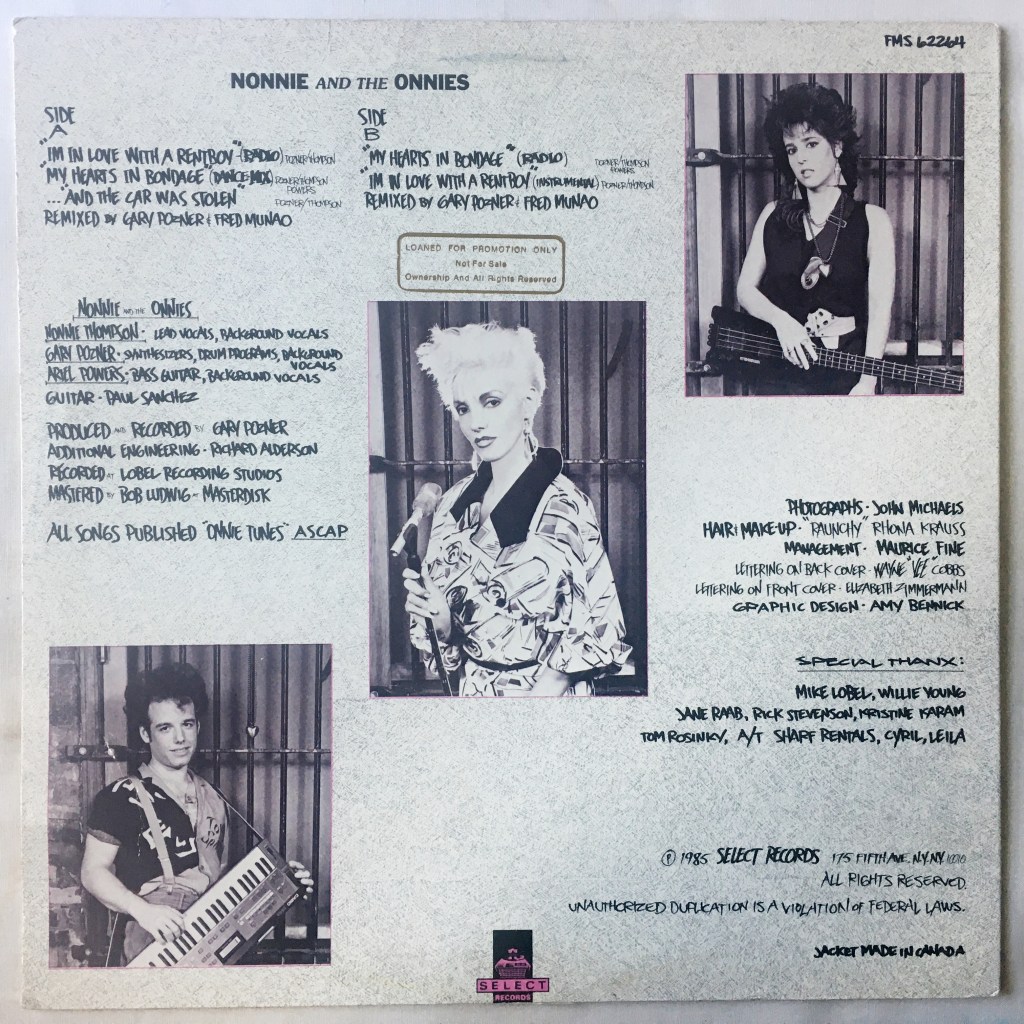
Nonnie and The Onnies is far from a household name. The group’s singular 12″ release isn’t much more than a relic of an industry in an era, but perhaps we can find new respect for such an album.

I’m in Love With A Rent Boy‘s sound is what’s to be expected from an American pop group only 2 years after the release of Madonna’s self-titled debut, albeit lacking Madonna’s synthetic-disco sound for something straddling the Bangles.

The mix is delightfully punchy, the album’s cover art amusing, and its absurdity somewhat intriguing. Rent Boy may be brief, but that only makes it more consumable.

Titular a-side opening track Rent Boy comes with all the trappings of new wave overindulgence and electronic trend following, much to the anguish of any current listener. The absurdity of I’m in Love With A Rent Boy may be the only thing not somewhat forgettable about this track, unfortunately.

Under all of Rent Boy’s commercial cheese is an extravaganza of American generica. Flavorless, plugged in, and devoid of self-reflective or interpersonal emotion. An overproduced musical jingle reminiscent of over-the-top TV ads.

A swing and a miss perhaps, as following track My Hearts in Bondage (Dance Mix) is so satisfyingly engaging. Hearts inches towards EBM with pounding drum machine rhythms driving under dark synth pads. Choppy self-sampling punches up the song’s pop vocal delivery. Its lyrics may not be particularly inspired, but Nonnie’s performance sells me on the emotions at play.

A shame, really, that a track so good would be hidden behind a pop single so bad. Hearts in Bondage may have been overlooked by a loving audience due to the EP’s titular track, but perhaps our current state of retromania will help unearth previously overlooked gems.

Rent Boy‘s A-side closes out with the instrumental …And The Car Was Stolen. It explores a further industrial element over it’s 42 second runtime before disappearing into the void. Far from a substantial song, Car Was Stolen functions as the perfect cinematic mood-setter for a would-be album of Hearts in Bondage.

The album’s b-side should at least be mentioned as a formality; a radio edit of Hearts in Bondage with an instrumental remix of Rent Boy to close out the EP. Unforgivably 80s in an unlovable way.

There is good work to be found on Rent Boy, if only the right crowd were to find it.

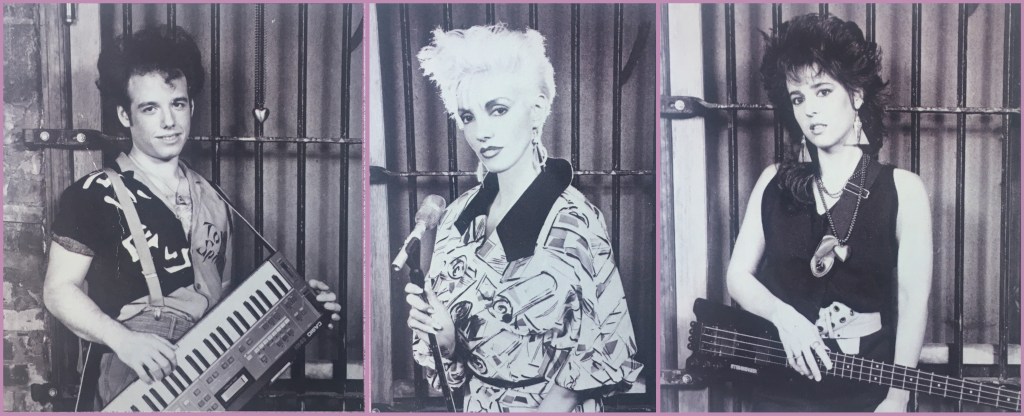
L to R: Gary Pozner, Nonnie Thompson, Ariel Powers.

If you’re curious what Nonnie Thompson has been up to since, this article from 2006 will have to suffice. Ariel Powers wracked up some more credits to her name throughout the 90s, and is still playing to this day. Gary Pozner, last I heard, is playing music around the south-west US.

For fans of: Madonna, Bananarama, Ministry (With Sympathy-era)

Like Nonnie and The Onnies? Give these a listen: Nocera, Front 242, Glass Candy

REVIEW: XL Fits – Hands + Knees (2017)

A live video of Hands + Knees live at Blockhouse in Bloomington Indiana 11/16/2018

It all happened on one fateful night.

Another rainy weekday night; some band from Japan was coming and playing a hole-in-the-wall I frequented. I knew nothing about them except their name: XL Fits.

The band showed up, loaded in and played to a room of 7 people including the staff. It was a half-hour of madness and confusion. What the hell was I watching? What the hell was I hearing? Loud, crashing chaos; The few attendees stood still, beer in hand, watching these 3 guys grind, wail, rock and thrash about.

As quickly as it started, the band finished and the attendees left. One of the members and I gestured a conversation the best we could to negotiate his beer order (a singular PBR) and I tried to express how great their set had been.

I quickly bought up all their merch, then the band packed up and left with barely a word spoken between us. I left as the venue closed up. I walked to my car, avoiding the broken glass and drunk tourists, thinking about all the people who had missed out on such a life changing show.

Cut to now; sitting down to write. XL Fits are a band so specifically weird that it was daunting to even take notes while listening to Hands + Knees. It truly is a 7″ single. There is no b-side, not even a runout groove.

A 3-piece avant garde punk rock group, XL Fits could be best described as 1 part Sex Pistols, 1 part Oxbow, and about 3 parts DNA. Rarely does it seem any two notes play at the same time. The drumming on Hands + Knees plays out like a hyper-specified algorithm, while Morricone-esque bass thumps out the same refrain. Vocals wail, groan and moan their way over a guitar that is ever shifting between wailing digital noise and clean, drawn out strums.

Each and every part is played with the confidence that things will line-up at the right moments, something that most of us listeners take for granted. And really, that’s all it needs. Far too tight and far too good to be reminiscent of The Shaggs, Hands + Knees plays as if by a three-headed being, able to regroup with precision timing.

XL Fits’ work remains mostly unknown and underappreciated by western audiences. Hands + Knees, as amazing and strange as it is, can’t convey the reassurance that there could be something new out there on the musical landscape in our age of retromania and artistic stagnation. A spiritual experience lost in translation, if I’ve ever seen one.

For fans of: DNA, Oxbow, Flipper

Like XL Fits? Give these a listen: Oxbow, DNA, Crack Cloud,

REVIEW: HellBillys – Evil 7″ (1995)

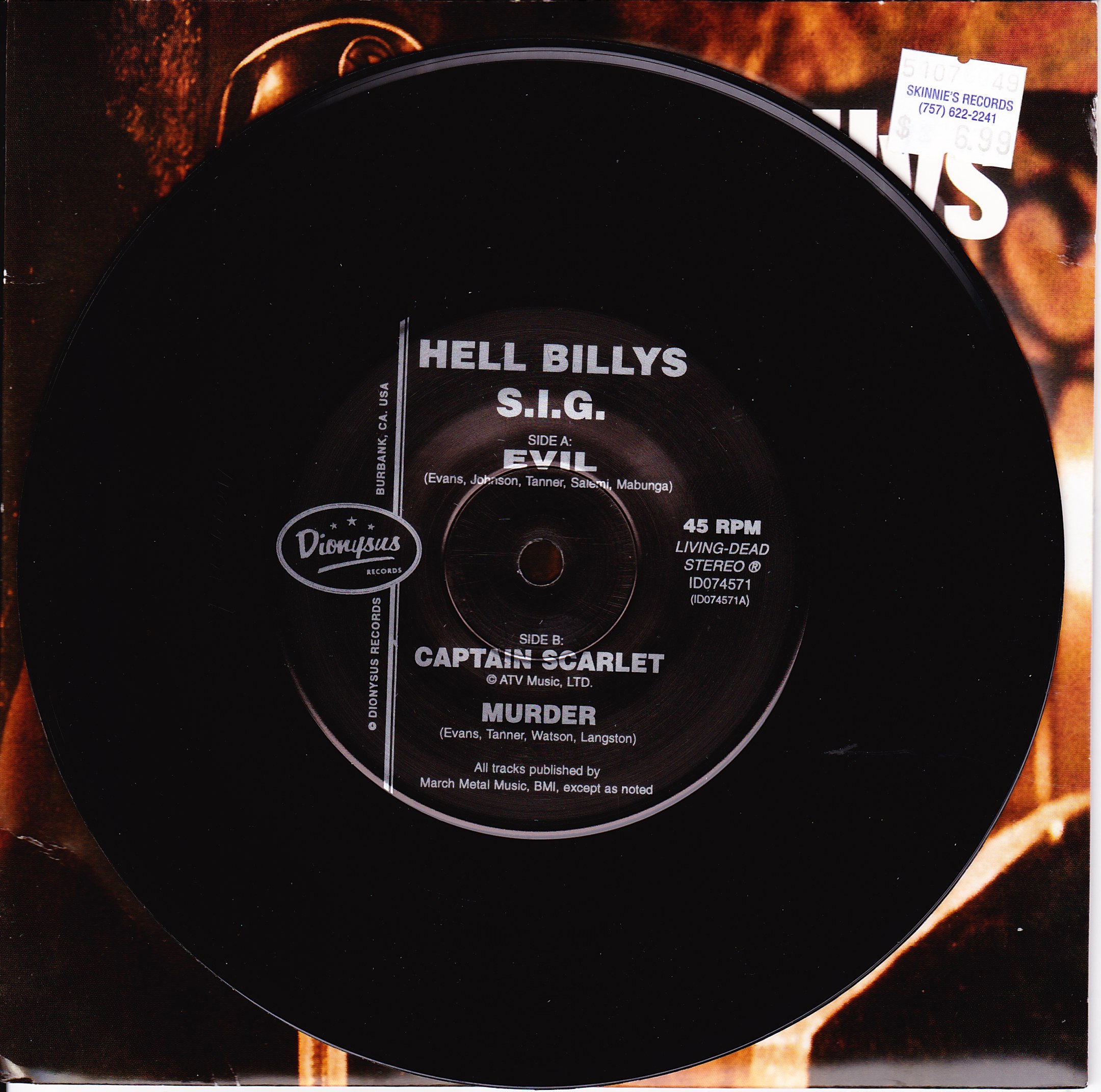
Evil is the final 7” single by the original American psychobilly band HellBillys. Fronted by vocalist Barrie Evans, the band consists of Greg Langston (drums), Rick Tanner (bass), and Dan Watson (guitar, formerly of progressive thrash metal band Hexx).

A-side titular track Evil is an exhibition of rock’n’roll aggression packed full of chugging palm-muted guitar. Always on the verge of rupturing forth, Evil growls along before Dan Waton’s expressive guitar work cries out in an explosive solo.

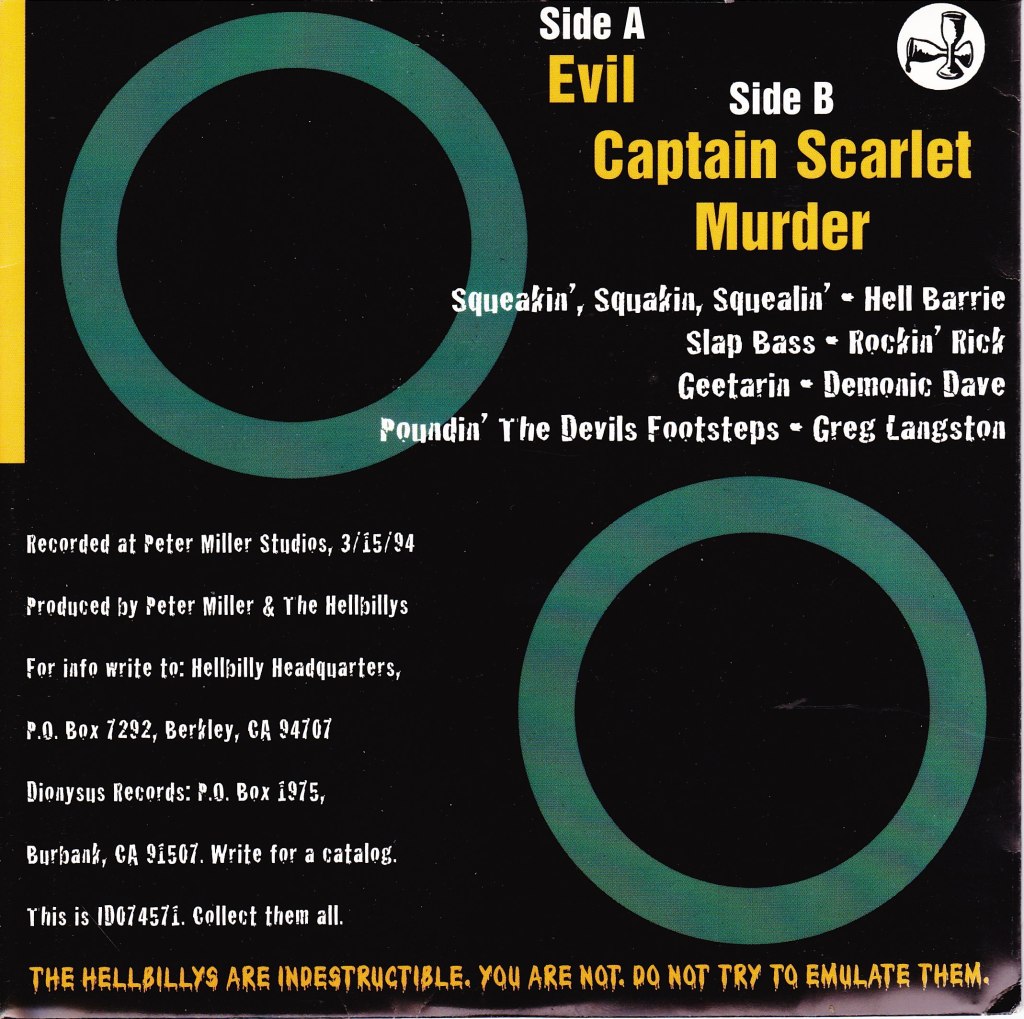
Vocalist ‘Hell’ Barrie Evans snarls, drools and seethes his way through a violent (yet reserved) performance. The “squeakin’, squakin’, [and] squealin’” Barrie’s vocal delivery, while at times indecipherable, is delivered with a nuance rarely seen in psychobilly.

The Evil 7” is mixed in a manner atypical to rockabilly revivalist tent genres. Unlike the compressed records of their contemporaries, Evil’s heavy low-end brings so much warmth as to justify calling it a weed mix.

In an interview conducted by Jessica Thiringer for Razorcake issue #31 (2006), Barrie Evans (going under his childhood nickname Scary) speaks about his time living in Japan and how it inspired the creation of The Hellbillys;

“When I was living in Tokyo, I had just left Christ on Parade and I was kind of sick of rockabilly. A friend invited me to a rockabilly show and I was blown away by how everybody looked. It was the same sort of vibe you get now (2006), but much earlier. Everyone’s dressed in vintage everything. I met the guy from the Falcons and went to see his band a week later. It was fast and heavy and had a cool look. I knew what I wanted to do.”

B-side opener Captain Scarlet is a reworking of Barry Gray’s theme for Captain Scarlet and The Mysterons; a 1960s UK children’s show exploring themes of morality dualism, social-integration, and nuclear devastation through the lens of interplanetary war. Did I mention that it was made for children? And used puppets?

HellBillys’ punched up take on Captain Scarlet features Barrie Evans’s vocals taking over the predecessor’s horn and vibraphone melody. Paired alongside themes of blatant evil, Captain Scarlet invokes the disturbing nature of a truly indestructible being.

Evil closes fittingly with Murder; a somewhat typical psychobilly romp of bass/snare syncopation and whammy’d western guitar chords topped with lyrical themes of internalized voices and, well, murder. It’s a great track, while not particularly inventive, predates the rigidity of today’s psychobilly scene.

In the same interview with Jessica Thiringer, Barrie unknowingly utters a forewarning of psychobilly’s inevitable stagnation.

“There wasn’t a template to follow. I think the regimentation of rockabilly has a lot to do with Continental Restyling (French magazine)— not that it’s bad, but it sucked the originality out of it. It’s however you interpret rockabilly. Psycho has a lot of room to grow. Let’s hope psycho doesn’t get regimented. I’ve always had a huge pomp. People put so much emphasis into looking correct, but back in the punk days you’d put together some kind of non sequitur outfit. Rockabilly used to be the same way. During the ‘80s, Macy’s (department store) even had a line of clothes called ‘‘80s Rocker,’ inspired by the Stray Cats.”

‘Stealing’ from one’s predecessors is completely natural, dare I say should be encouraged. Nothing is completely new under the sun. But it’s about that time of year when we need revisit an oft-repeated T. S. Eliot’s quote;

“Immature poets imitate; mature poets steal; bad poets deface what they take, and good poets make it into something better, or at least something different. The good poet welds his theft into a whole of feeling which is unique, utterly different from that from which it came.”

Or, to quote the back of the record jacket:

“THE HELLBILLYS ARE INDESTRUCTIBLE. YOU ARE NOT. DO NOT TRY TO EMULATE THEM.”

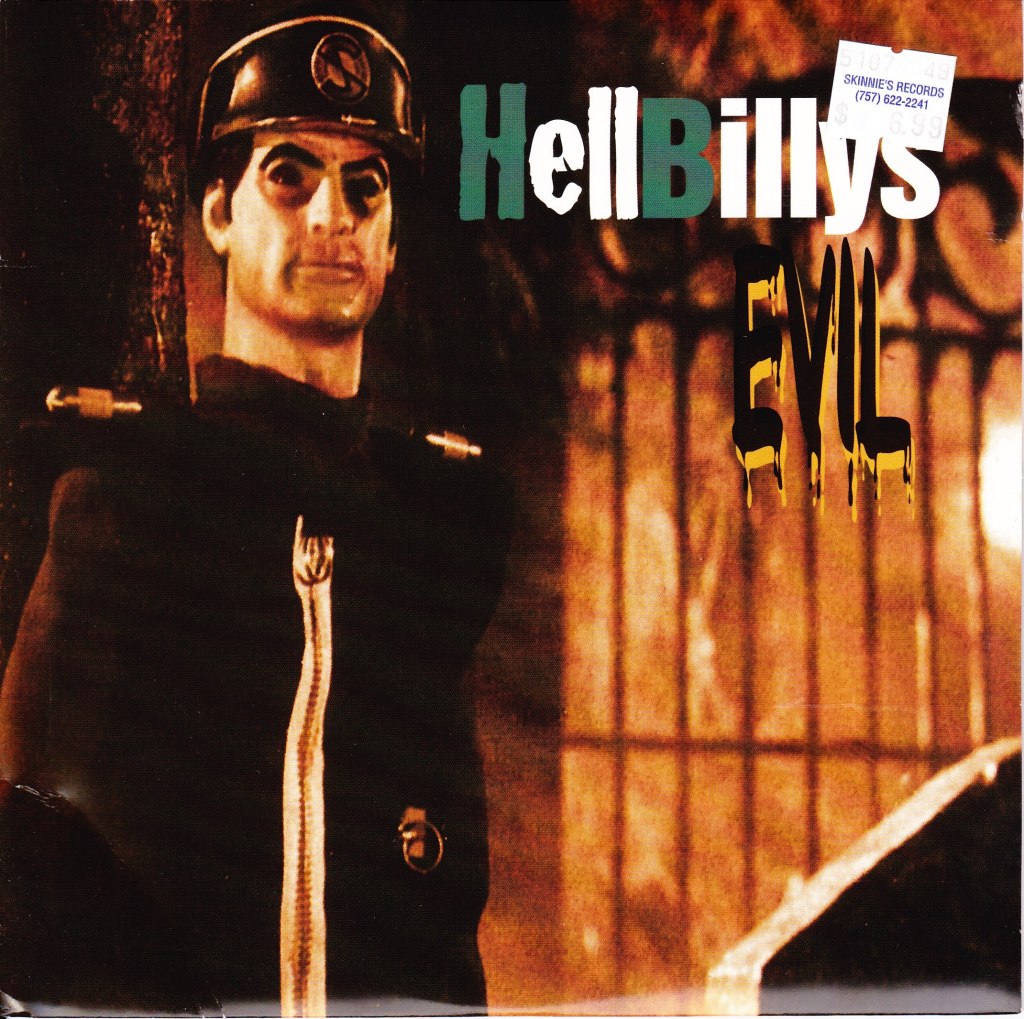
Hellbillys – Evil 7″ (1995) front cover featuring antagonist Captain Black from Captain Scarlet and The Mysterons, looking like a middle-aged Lee Ving (FEAR).
“THE HELLBILLYS ARE INDESTRUCTIBLE. YOU ARE NOT. DO NOT TRY TO EMULATE THEM.”

For fans of: The Misfits, Nekromantix, Koffin Kats

Like Hellbillys? Give these a listen: Alien Blood Transfusion, Demented Are Go!, The Monarchs

REVIEW: The Monarchs – Heads Up EP (1995)

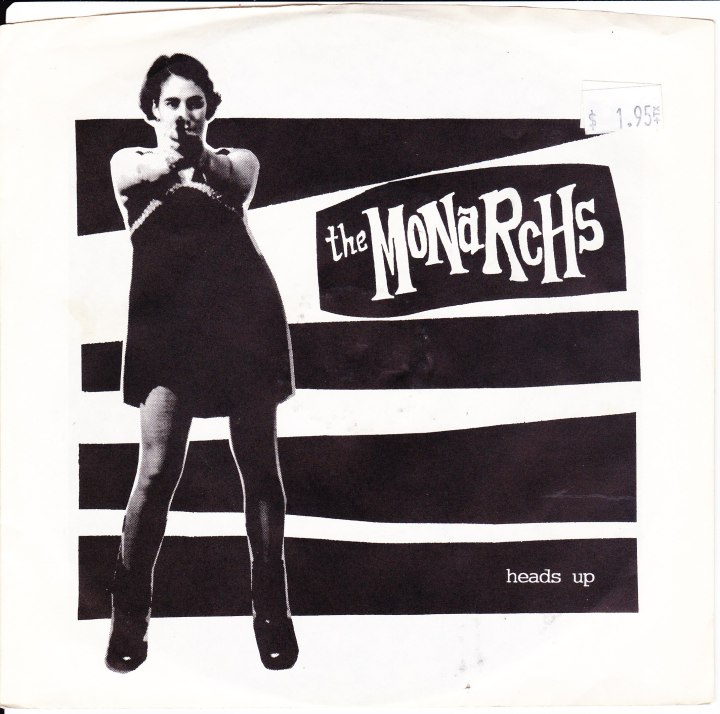
Released on Estrus Records in 1995, the Heads Up EP by The Monarchs is a rudimentary garage rock romp. The Ann Arbor, Michigan 4-piece consisted of Sarah McCabe, Tommy Oliver, Greg Hughes, and Andrew Claydon.

Hit That B*&¢# takes up the entirety of Heads Up EP‘s a-side. It’s not entirely certain why a band like this would lightly obscure a word both obvious and repetitively used within the song. Perhaps it’s part of a band’s kitsch, conflicting morals, or someone’s mom. Tinged with only a slight degree of internalized misogyny, Hit That B*&¢# is the #girlboss take on a long lineage of toxic-relationship jealousy songs.

Were they being serious? Probably not. Revivalist genres naturally repeat the tropes of their predecessors, even when those tropes only existed due to societal ills. Perhaps there was a degree of subversion to the song, lost to the record’s somewhat blownout recording. Regardless, Was it maybe a little stupid? Yes. Then again, everything in the 90s was a little stupid. We move on and move forward.

Instrumental titular track Heads Up takes pole position on the album’s b-side, despite the sleeve’s listing. The most ‘true’ to the original wave of garage rock, Heads Up ditches Sarah McCabe’s shouted-out vocals for organ. The general inoffensiveness of Heads Up still manages to keep up with the punk-influenced tracks on either side of it. With secret agent surf riffs and classic garage rock structuring, Heads Up (both song and album) thrashes in a way that only garage punk can.

While not as rewarding as Alien Blood Transfusion, this garage rock exploit still manages to capture the feeling of John Waters and b-movie film nights with friends. Even when embracing a ‘low-risk/low reward’ artistic approach, The Monarchs put together 3-tracks of punch-y garage rock fun.

The Monarchs may hit too hard for garage rock purists, but the kids don’t care.

For fans of: The Mummies, Bikini Kill, Link Wray

Like The Monarchs? Give these a listen: The Spits, Psycotic Pineapple, Shitkid

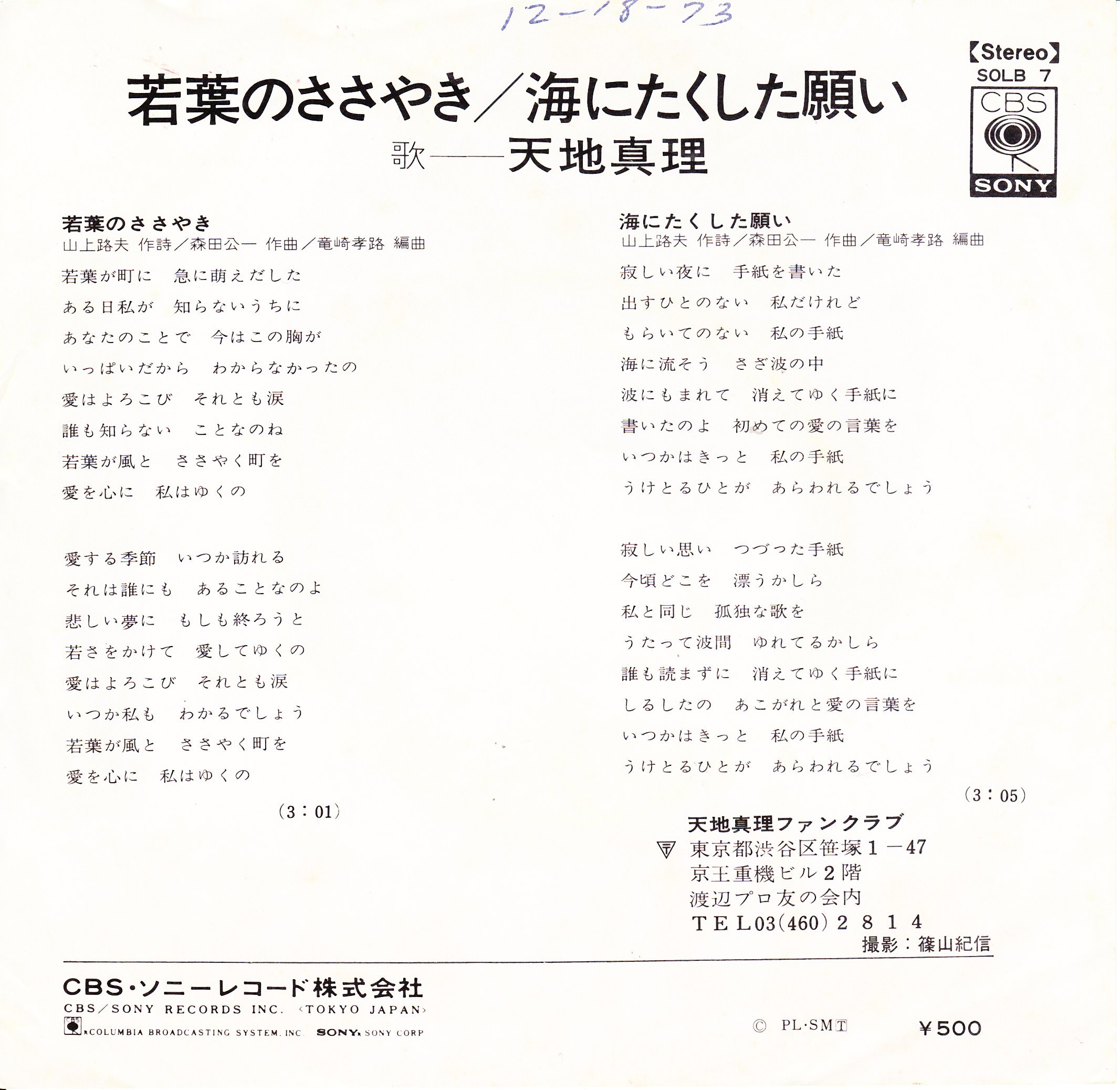
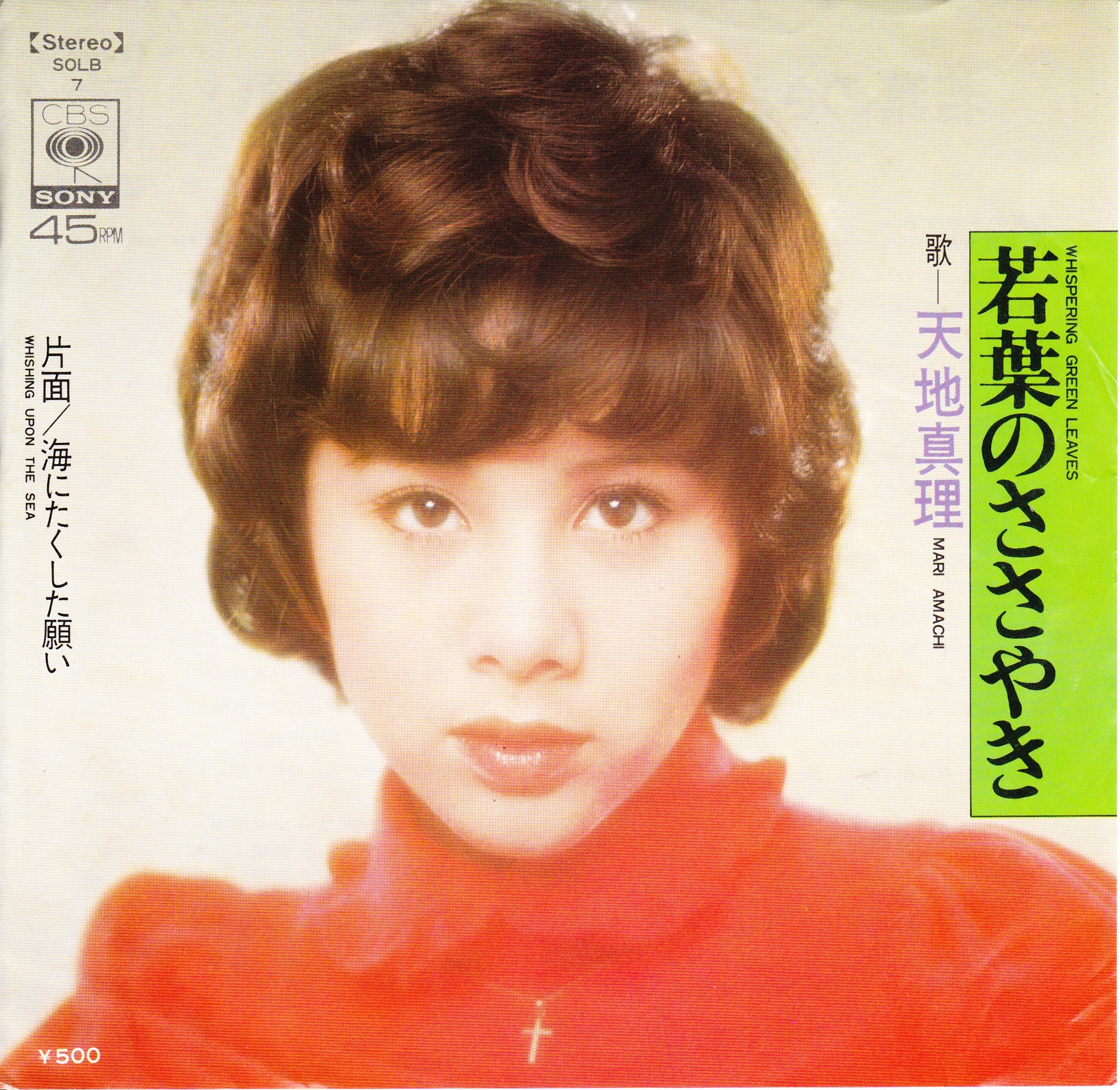
REVIEW: Mari Amachi – Whispering Green Leaves b/w Wishing Upon The Sea 7” (1973)

There is nothing too ground breaking or distinct about this 7”. Mari Amachi was considered “Sony’s Snow White” in Japan, as well as the start of Japanese idol culture in the 1970s/80s. Maybe from an outsider (both in time and place) this translates to a lack of appreciation for what would make this record in particular stand out.

Taking up the record’s a-side, a cinematic quality pervades Whispering Green Leaves. Instrumentation plods along, complimented by exciting flurries of strings. Whispering Green Leaves’s cinematic qualities are best exemplified by lush Mancini-esque string arrangements which thrust the composition into amplified emotions.

Nearly a decade prior to electro pop, this record manages to escape the fetishism of retromania’s preferred sonic tropes. Maybe this allows the listener to hear the record as objectively as possible. Even then, it’s impossible to eradicate personal tastes (however manipulated they may be).

B-side track Wishing Upon The Sea (海にたくした願い) is made-for-TV (70s TV, that is). I mean that as a good thing, somehow. Relying on my outsider’s ignorance, Wishing Upon The Sea’s 1970s trappings weren’t the antagonizing cheese of my childhood.

Backed by Sony’s impressive session musicians of the time, Mari Amachi’s singing is particularly beautiful here. Each piece of instrumentation compliments each other in hopeful melancholy. It’s not quite a powerhouse of emotional display, but still delivers a mildly entertaining listen.

Perhaps it is as it appears to be, a mildly enjoyable but somewhat forgettable pop record of yesteryear. Whispering Green Leaves may not be heavily sought after in this day and age, but if you can get your hands on it, Wishing Upon The Sea is a delightfully pleasant b-side worth the occasional spin at home.

For fans of: Doris, Alice Dona, Stelvio Cipriani

Like Mari Amachi? Give these a listen: Giuliano Sorgini, Clothilde, Armando Trovajoli

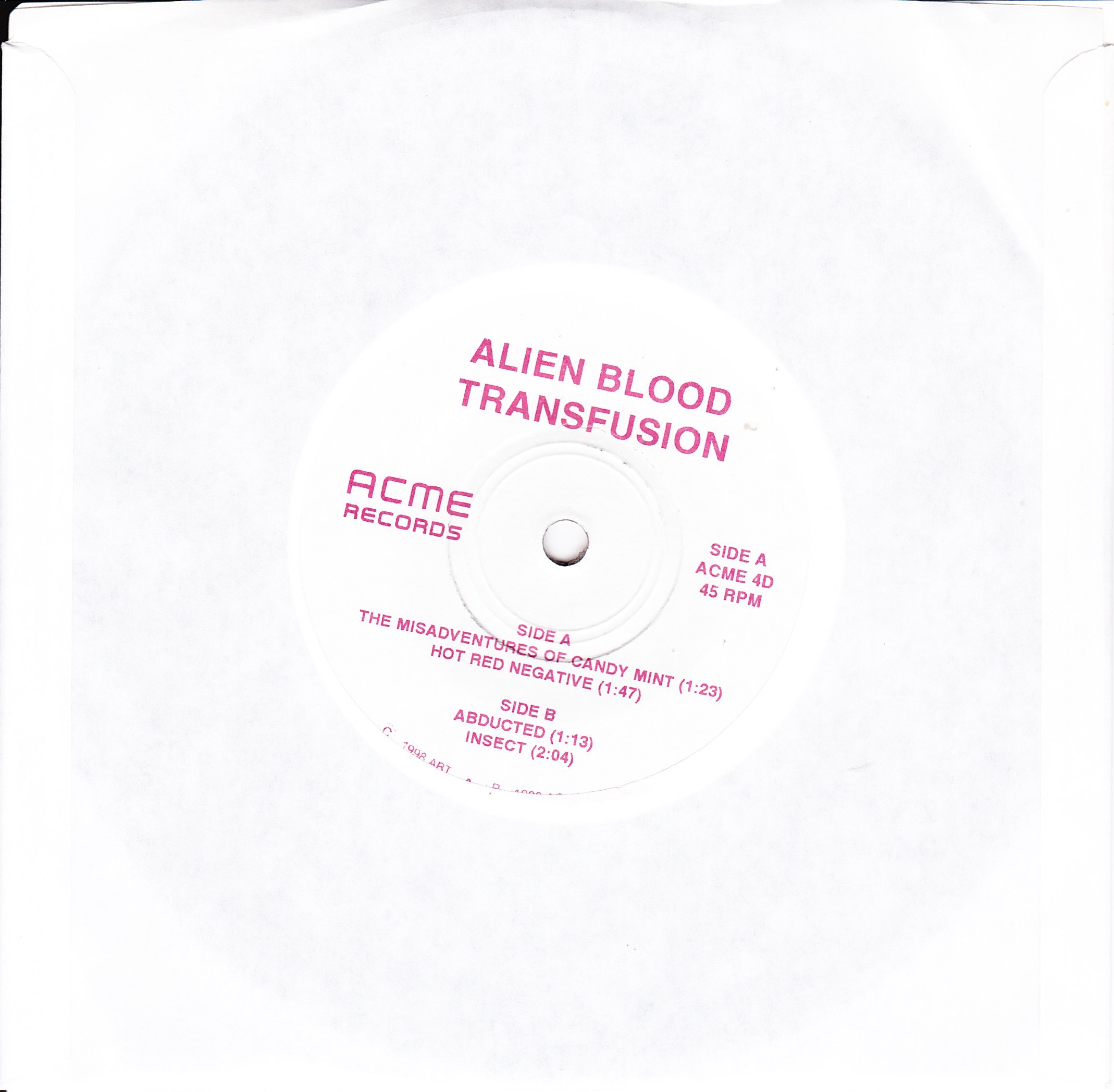
REVIEW: Alien Blood Transfusion – Alien Blood Transfusion 7″ (1998)

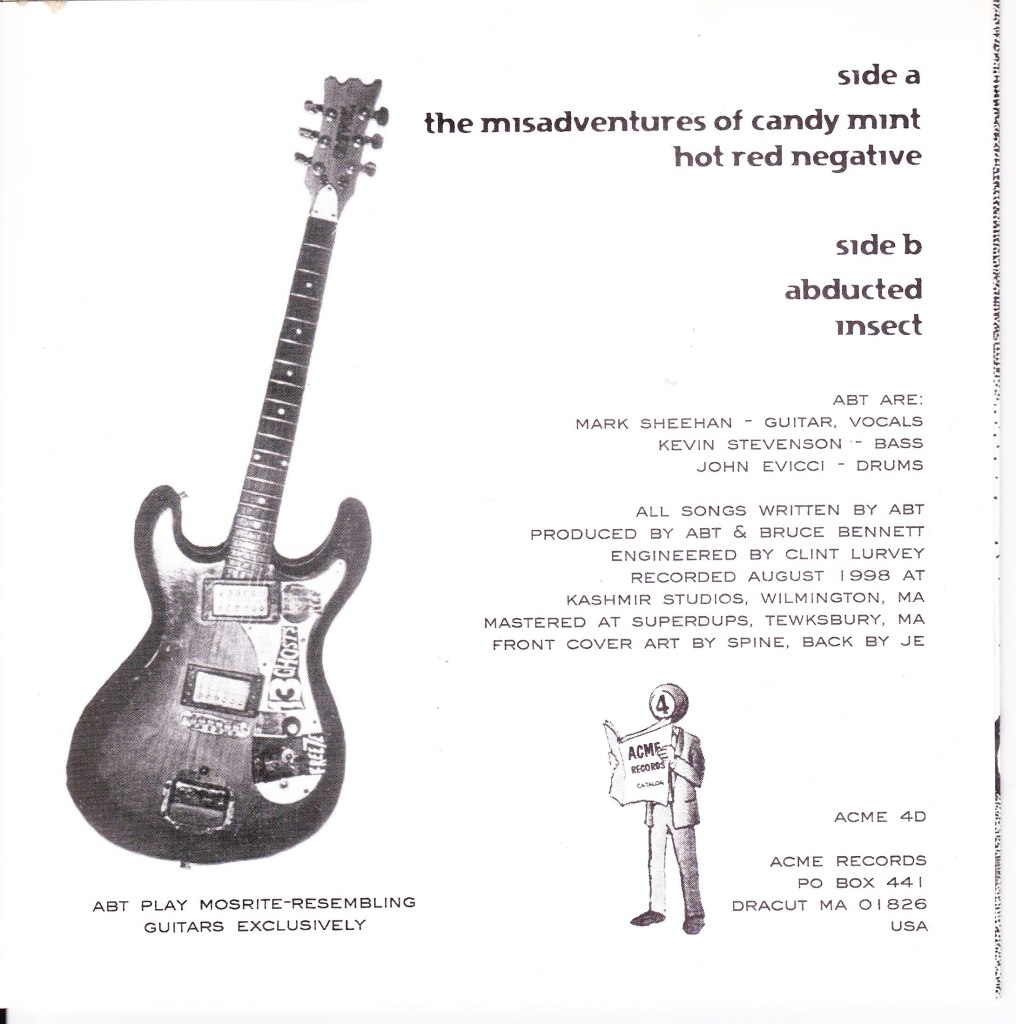
The side project of Massachusetts hardcore outfit Out Cold, Alien Blood Transfusion was the slightly scaled back, “Ramones-meets-GBH” garage punk outlet for members Mark Sheehan (guitar, vocals) and John Evicci (drums). Joined by Kevin Stevenson (bass) of The Shods, this 3-piece released The Many Faces of Ilsa 5” prior to this 1998 self-titled masterpiece of sci-fi garage punk obscurity.

Alien Blood Transfusion 7″ kicks off with a sample that can only be described as B-movie; a sort of mental picture painted before hitting the road with The Misadventures of Candy Mint. The instrumental punk rock romp is perhaps the slowest of the 4 songs on the album, but gets the ball rolling with Evicci’s stand-out drumming. Sheehan’s tightened vocals join up on following track Hot Red Negative and remain present throughout the rest of the album’s 6 minute 30 second run time.

The album’s B-side starts off at flying speeds with song Abducted before transitioning into Insect, its descending riffs reminiscent of Coffin Break’s grunge-styled punk records. Evicci and Stevenson’s simultaneously bouncing and pummeling rhythm section create the perfect backdrop for the garage rock guitar work of Sheehan.

Distanced from the worn-out ‘classics’ of yesteryear’s fringe culture, Alien Blood Transfusion’s sci-fi lyrical and visual aesthetics made for a refreshing take on b-horror in punk. In its obscurity, the album fit right alongside nights of pinball, skateboarding, and upstaging friends with the worst of trash and horror cinema (thank you, John Waters).

Learning the art of culturally curating one’s life may now be tinged by the ghosts of hipsters past, but finding Alien Blood Transfusion was the ultimate reward for wading through endless amounts of cheap 7” records every day after school. So the next time you’re looking through cheap records, ask yourself, ‘does this look cool?’ You may strike it rich (figuratively speaking).

“ABT play Mosrite-resembling guitars exclusively”

Alien Blood Transfusion 7" record cover art 1998 mark sheehan kevin stevenson john evicci dracut massachusetts
alien blood transfusion 7" record back cover art mark sheehan kevin stevenson john evicci

For fans of: Misfits, New Bomb Turks, Man or Astro-Man?

Like Alien Blood Transfusion? Give these a listen: The Hellbillys, Hellacopters, Marginal Man

REVIEW: Snuff – Long Ball to No-One (1996)

Long Ball to No One is an EP of outtakes from the 1996 album Demmamussabebonk by UK melodic punk legends Snuff. This EP consists of 3 songs; the anthemic opening Caught in Session, the passionate and rowdy Walk, and down’n’out closer Dow Dow Boof Boof.

The whole EP clocks under 7 minutes, but there’s not a dull moment on it. Snuff’s use of horns and organ beat out the ’So-Cal’ hokeyness of their Fat Wreck Chords label mates by amplifying the Burt Bacharach elements of their compositions. Drummer/singer Duncan Redmonds’ practically signature use of swing notes give Snuff a unique soul that is critical to what makes a Snuff record a Snuff record.

I could go on about Snuff forever, but much like this EP I’ll keep it brief. Give Long Ball to No One a listen, and then give all their records a listen. Even at their worst, it’s worth your time.

For fans of: Buzzcocks, Youth Brigade, Madness

Like Snuff? Give these a listen: Marginal Man, Drinking Boys & Girls Choir, Guns ‘N’ Wankers