Pleasure Venom is the 2018 self-titled release by Austin, TX based “experimental garage punk outfit” Pleasure Venom.
Right off the bat, Pleasure Venom unabashedly provokes an image of the very ‘in’ gothic aesthetics, though doesn’t utilize them in any particularly meaningful way. From the Birthday Party-esque guitar cacophony on Gunt to a general rundown of Robert Smith’s pedalboard effects (tremolo, flange, reverb, you can guess the rest) across the entire album, none of these aesthetics serve the particular songs all that well.
The 6 track album is a mixture of stomp and romp punk pub rock and goth dance rhythms. Everyone is on beat for the most part, and front person Audrey Campbell’s vocal delivery can be quite thrilling (especially on tracks Deth and Untitled). But if you feel underwhelmed while reading this, well, that’s how I felt listening to it.
Closing track Eddy is capped off with a great orchestrated outro, a much needed splash of rich color and depth delivered as a final gesticulation of the death rock aesthetics purported to define the album. I would have loved to see more of this throughout the album, letting the interludes and outros work the album’s aesthetic angle while pushing the songs the band had written a little harder, with less distractions.
Pleasure Venom is a punk record through and through. Perhaps there is a harder Grunge rock sound underlying it all, but experimental and No Wave (as one Bandcamp user called it) it is not.
What can I say? The record is fun, loud, and fast in all the normal places. There isn’t much to take in. Maybe that’s what their audience wants.
For fans of: Secret Shame, Amyl and The Sniffers, Mudhoney
A live video of Hands + Knees live at Blockhouse in Bloomington Indiana 11/16/2018
It all happened on one fateful night.
Another rainy weekday night; some band from Japan was coming and playing a hole-in-the-wall I frequented. I knew nothing about them except their name: XL Fits.
The band showed up, loaded in and played to a room of 7 people including the staff. It was a half-hour of madness and confusion. What the hell was I watching? What the hell was I hearing? Loud, crashing chaos; The few attendees stood still, beer in hand, watching these 3 guys grind, wail, rock and thrash about.
As quickly as it started, the band finished and the attendees left. One of the members and I gestured a conversation the best we could to negotiate his beer order (a singular PBR) and I tried to express how great their set had been.
I quickly bought up all their merch, then the band packed up and left with barely a word spoken between us. I left as the venue closed up. I walked to my car, avoiding the broken glass and drunk tourists, thinking about all the people who had missed out on such a life changing show.
Cut to now; sitting down to write. XL Fits are a band so specifically weird that it was daunting to even take notes while listening to Hands + Knees. It truly is a 7″ single. There is no b-side, not even a runout groove.
A 3-piece avant garde punk rock group, XL Fits could be best described as 1 part Sex Pistols, 1 part Oxbow, and about 3 parts DNA. Rarely does it seem any two notes play at the same time. The drumming on Hands + Knees plays out like a hyper-specified algorithm, while Morricone-esque bass thumps out the same refrain. Vocals wail, groan and moan their way over a guitar that is ever shifting between wailing digital noise and clean, drawn out strums.
Each and every part is played with the confidence that things will line-up at the right moments, something that most of us listeners take for granted. And really, that’s all it needs. Far too tight and far too good to be reminiscent of The Shaggs, Hands + Knees plays as if by a three-headed being, able to regroup with precision timing.
XL Fits’ work remains mostly unknown and underappreciated by western audiences. Hands + Knees, as amazing and strange as it is, can’t convey the reassurance that there could be something new out there on the musical landscape in our age of retromania and artistic stagnation. A spiritual experience lost in translation, if I’ve ever seen one.
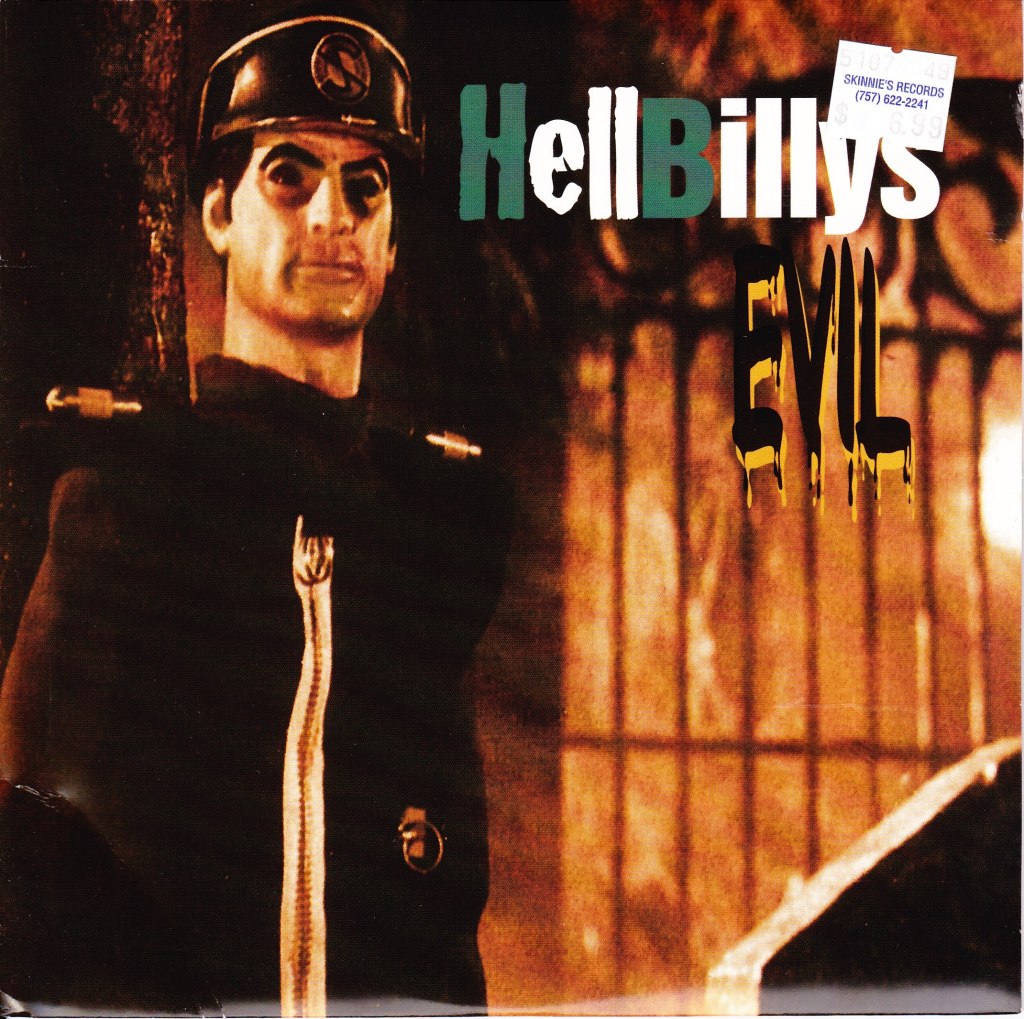
Evil is the final 7” single by the original American psychobilly band HellBillys. Fronted by vocalist Barrie Evans, the band consists of Greg Langston (drums), Rick Tanner (bass), and Dan Watson (guitar, formerly of progressive thrash metal band Hexx).
A-side titular track Evil is an exhibition of rock’n’roll aggression packed full of chugging palm-muted guitar. Always on the verge of rupturing forth, Evil growls along before Dan Waton’s expressive guitar work cries out in an explosive solo.
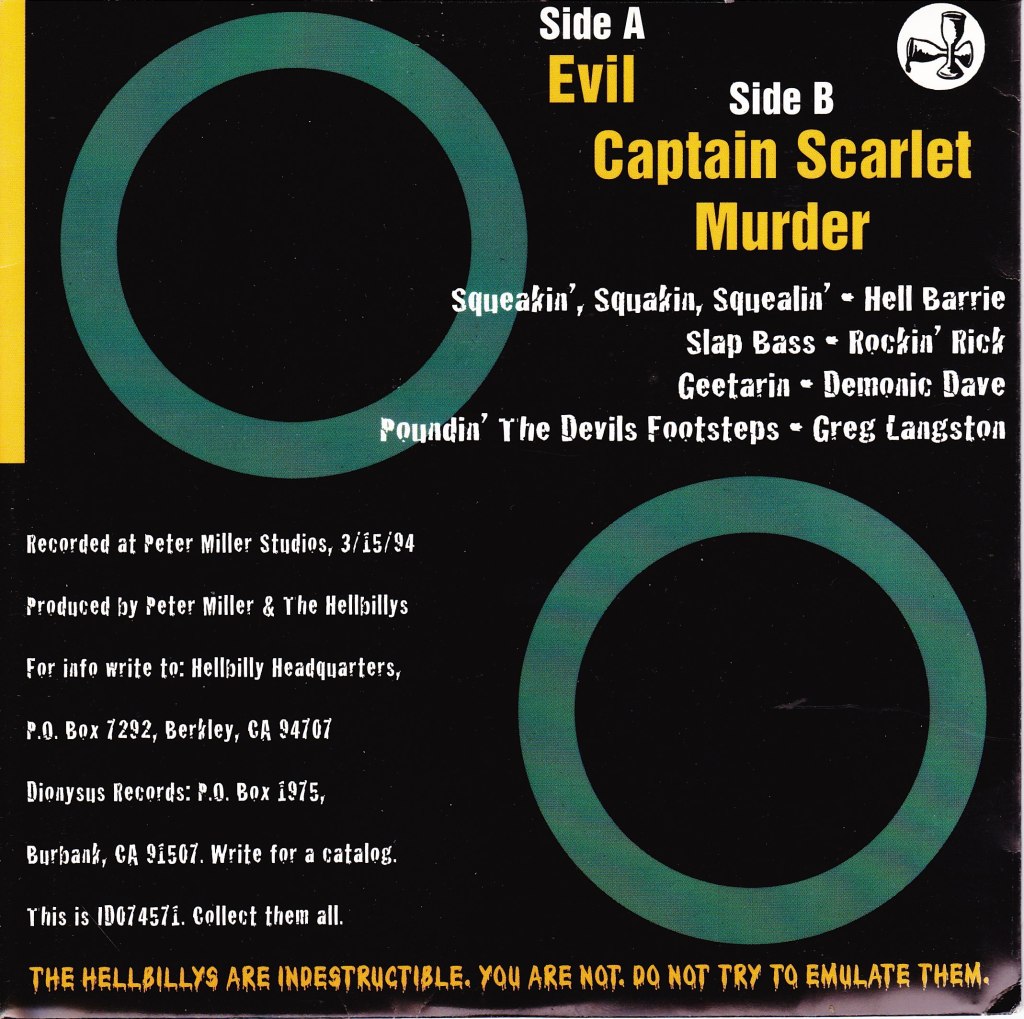
Vocalist ‘Hell’ Barrie Evans snarls, drools and seethes his way through a violent (yet reserved) performance. The “squeakin’, squakin’, [and] squealin’” Barrie’s vocal delivery, while at times indecipherable, is delivered with a nuance rarely seen in psychobilly.
The Evil 7” is mixed in a manner atypical to rockabilly revivalist tent genres. Unlike the compressed records of their contemporaries, Evil’s heavy low-end brings so much warmth as to justify calling it a weed mix.
In an interview conducted by Jessica Thiringer for Razorcake issue #31 (2006), Barrie Evans (going under his childhood nickname Scary) speaks about his time living in Japan and how it inspired the creation of The Hellbillys;
“When I was living in Tokyo, I had just left Christ on Parade and I was kind of sick of rockabilly. A friend invited me to a rockabilly show and I was blown away by how everybody looked. It was the same sort of vibe you get now (2006), but much earlier. Everyone’s dressed in vintage everything. I met the guy from the Falcons and went to see his band a week later. It was fast and heavy and had a cool look. I knew what I wanted to do.”
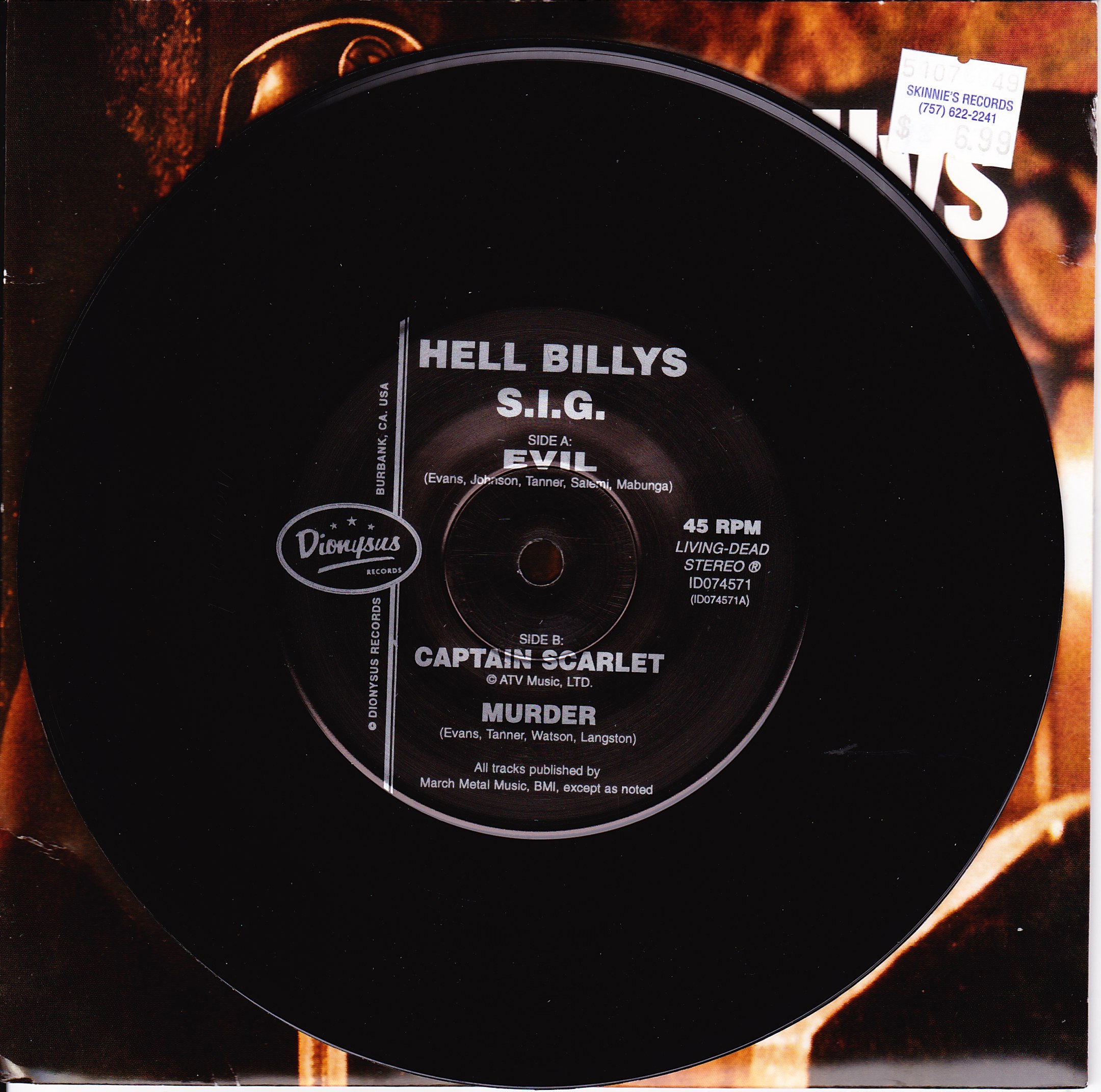
B-side opener Captain Scarlet is a reworking of Barry Gray’s theme for Captain Scarlet and The Mysterons; a 1960s UK children’s show exploring themes of morality dualism, social-integration, and nuclear devastation through the lens of interplanetary war. Did I mention that it was made for children? And used puppets?
HellBillys’ punched up take on Captain Scarlet features Barrie Evans’s vocals taking over the predecessor’s horn and vibraphone melody. Paired alongside themes of blatant evil, Captain Scarlet invokes the disturbing nature of a truly indestructible being.
Evil closes fittingly with Murder; a somewhat typical psychobilly romp of bass/snare syncopation and whammy’d western guitar chords topped with lyrical themes of internalized voices and, well, murder. It’s a great track, while not particularly inventive, predates the rigidity of today’s psychobilly scene.
In the same interview with Jessica Thiringer, Barrie unknowingly utters a forewarning of psychobilly’s inevitable stagnation.
“There wasn’t a template to follow. I think the regimentation of rockabilly has a lot to do with Continental Restyling (French magazine)— not that it’s bad, but it sucked the originality out of it. It’s however you interpret rockabilly. Psycho has a lot of room to grow. Let’s hope psycho doesn’t get regimented. I’ve always had a huge pomp. People put so much emphasis into looking correct, but back in the punk days you’d put together some kind of non sequitur outfit. Rockabilly used to be the same way. During the ‘80s, Macy’s (department store) even had a line of clothes called ‘‘80s Rocker,’ inspired by the Stray Cats.”
‘Stealing’ from one’s predecessors is completely natural, dare I say should be encouraged. Nothing is completely new under the sun. But it’s about that time of year when we need revisit an oft-repeated T. S. Eliot’s quote;
“Immature poets imitate; mature poets steal; bad poets deface what they take, and good poets make it into something better, or at least something different. The good poet welds his theft into a whole of feeling which is unique, utterly different from that from which it came.”
Or, to quote the back of the record jacket:
“THE HELLBILLYS ARE INDESTRUCTIBLE. YOU ARE NOT. DO NOT TRY TO EMULATE THEM.”
Hellbillys – Evil 7″ (1995) front cover featuring antagonist Captain Black from Captain Scarlet and The Mysterons, looking like a middle-aged Lee Ving (FEAR).
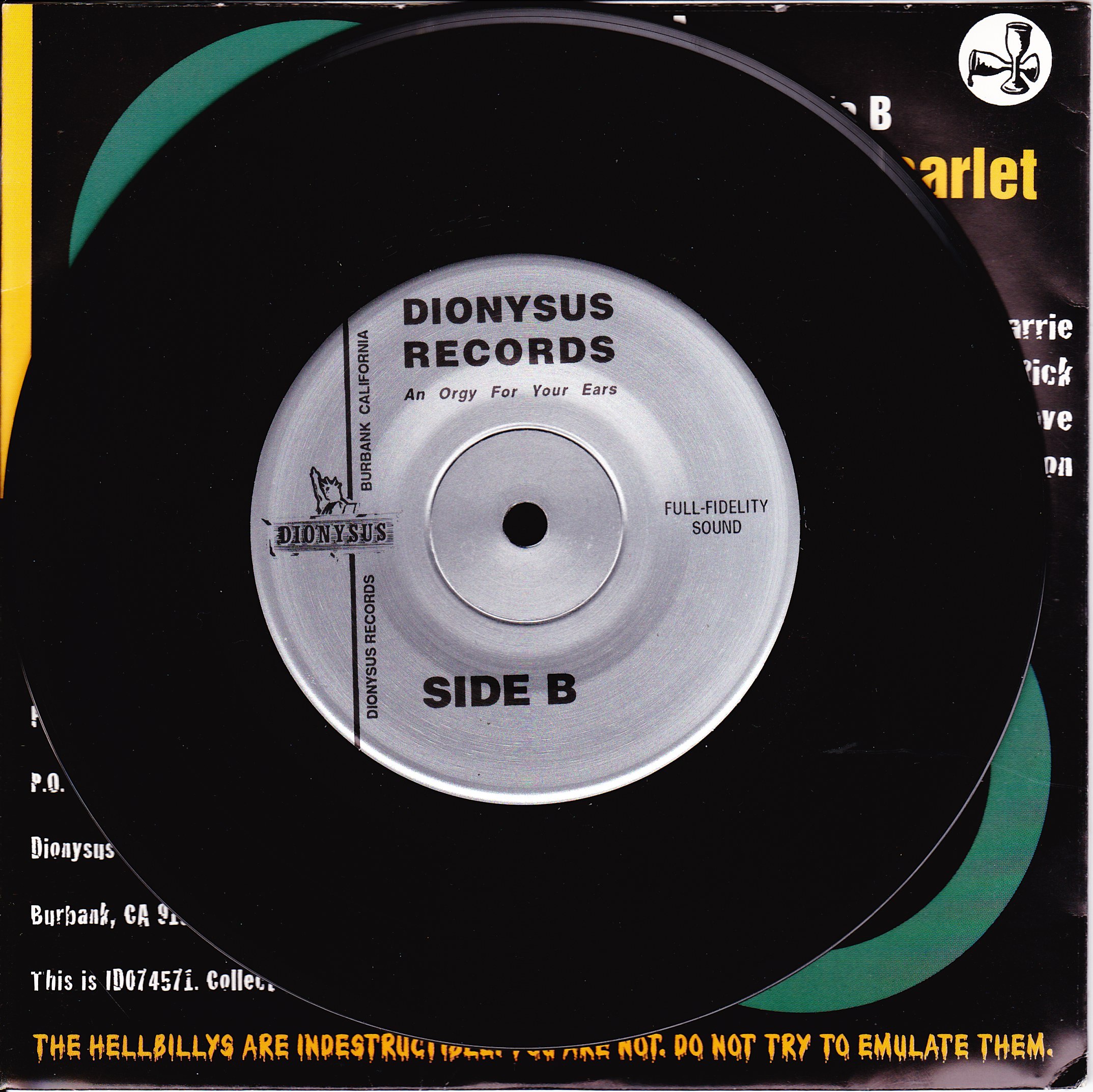
“THE HELLBILLYS ARE INDESTRUCTIBLE. YOU ARE NOT. DO NOT TRY TO EMULATE THEM.”
For fans of: The Misfits, Nekromantix, Koffin Kats
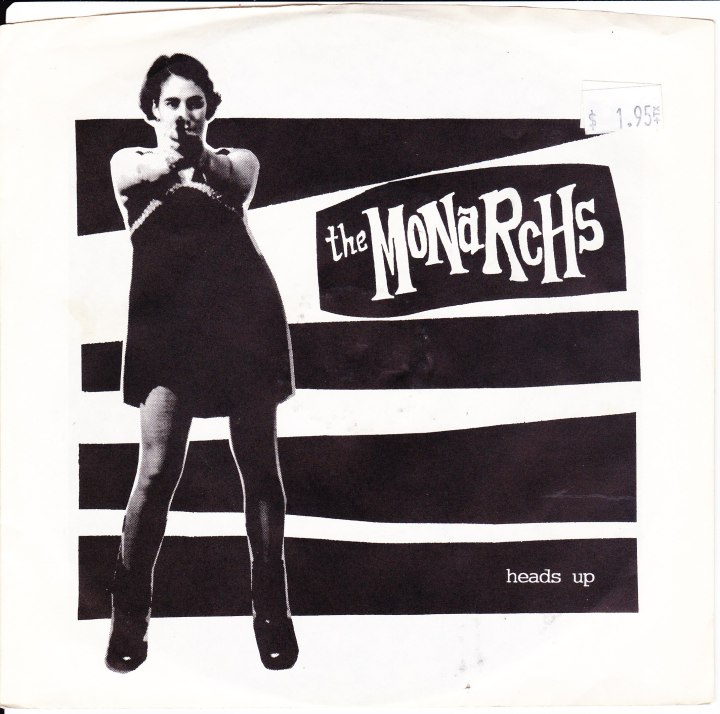
Released on Estrus Records in 1995, the Heads Up EP by The Monarchs is a rudimentary garage rock romp. The Ann Arbor, Michigan 4-piece consisted of Sarah McCabe, Tommy Oliver, Greg Hughes, and Andrew Claydon.
Hit That B*&¢# takes up the entirety of Heads Up EP‘s a-side. It’s not entirely certain why a band like this would lightly obscure a word both obvious and repetitively used within the song. Perhaps it’s part of a band’s kitsch, conflicting morals, or someone’s mom. Tinged with only a slight degree of internalized misogyny, Hit That B*&¢# is the #girlboss take on a long lineage of toxic-relationship jealousy songs.
Were they being serious? Probably not. Revivalist genres naturally repeat the tropes of their predecessors, even when those tropes only existed due to societal ills. Perhaps there was a degree of subversion to the song, lost to the record’s somewhat blownout recording. Regardless, Was it maybe a little stupid? Yes. Then again, everything in the 90s was a little stupid. We move on and move forward.
Instrumental titular track Heads Up takes pole position on the album’s b-side, despite the sleeve’s listing. The most ‘true’ to the original wave of garage rock, Heads Up ditches Sarah McCabe’s shouted-out vocals for organ. The general inoffensiveness of Heads Up still manages to keep up with the punk-influenced tracks on either side of it. With secret agent surf riffs and classic garage rock structuring, Heads Up (both song and album) thrashes in a way that only garage punk can.
While not as rewarding as Alien Blood Transfusion, this garage rock exploit still manages to capture the feeling of John Waters and b-movie film nights with friends. Even when embracing a ‘low-risk/low reward’ artistic approach, The Monarchs put together 3-tracks of punch-y garage rock fun.
The Monarchs may hit too hard for garage rock purists, but the kids don’t care.
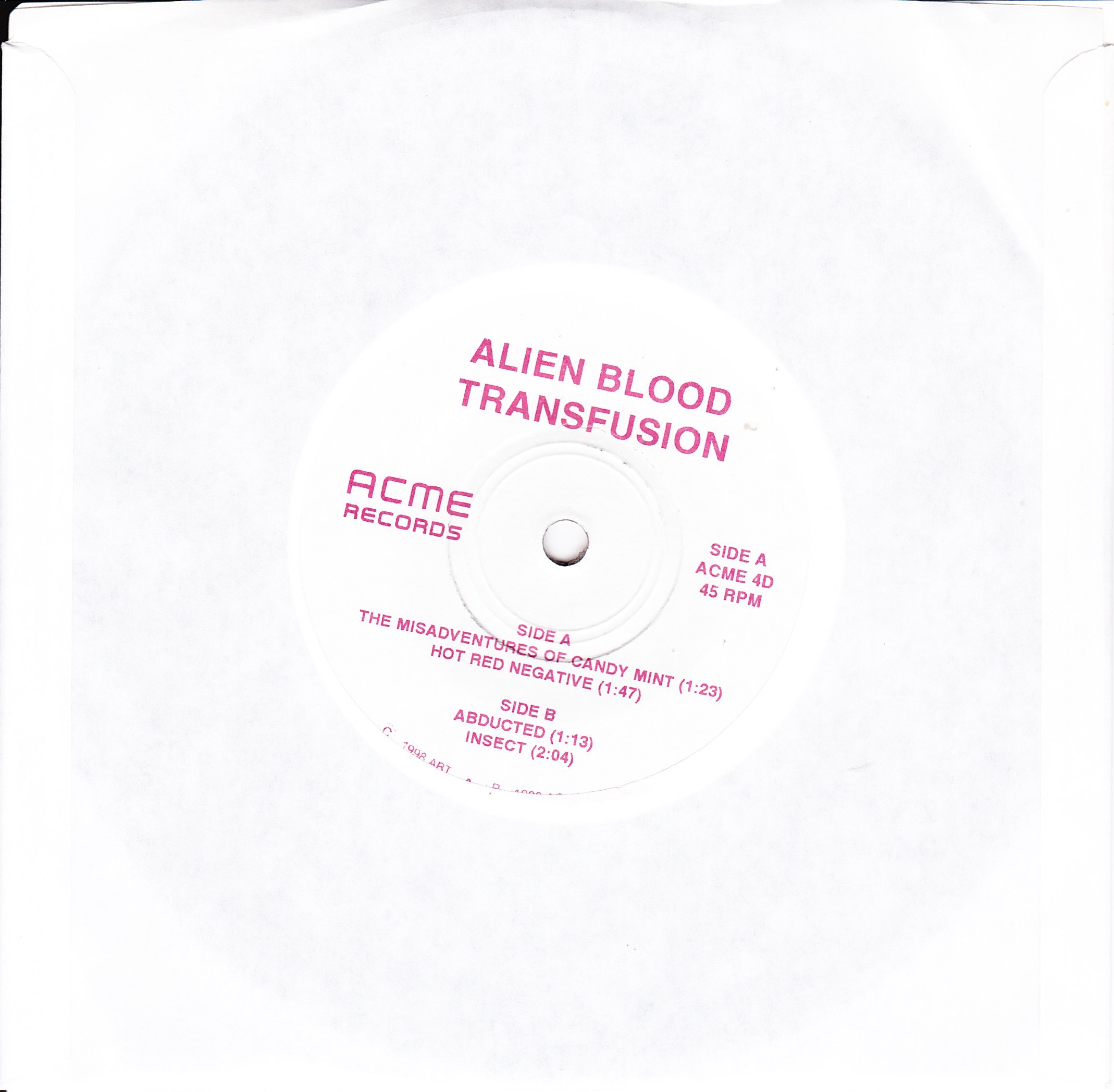
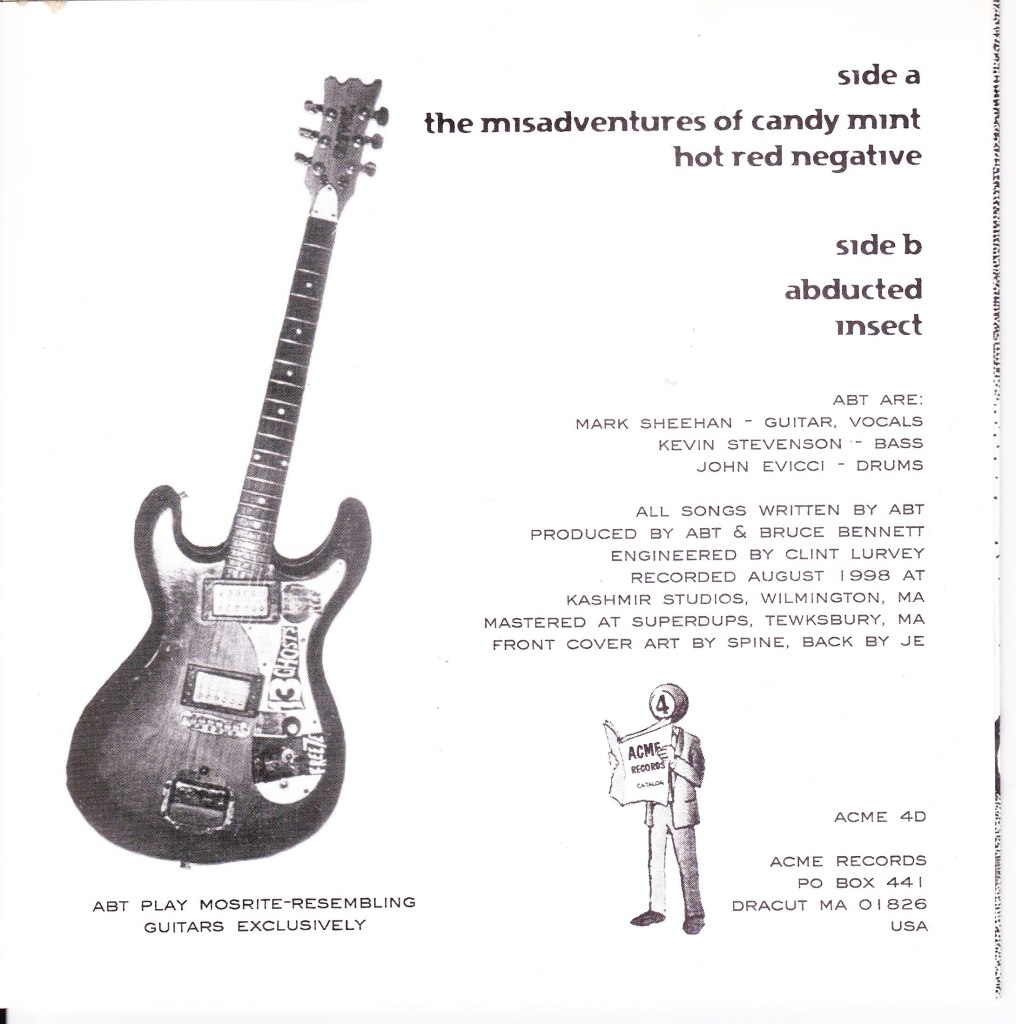
The side project of Massachusetts hardcore outfit Out Cold, Alien Blood Transfusion was the slightly scaled back, “Ramones-meets-GBH” garage punk outlet for members Mark Sheehan (guitar, vocals) and John Evicci (drums). Joined by Kevin Stevenson (bass) of The Shods, this 3-piece released The Many Faces of Ilsa 5” prior to this 1998 self-titled masterpiece of sci-fi garage punk obscurity.
Alien Blood Transfusion 7″ kicks off with a sample that can only be described as B-movie; a sort of mental picture painted before hitting the road with The Misadventures of Candy Mint. The instrumental punk rock romp is perhaps the slowest of the 4 songs on the album, but gets the ball rolling with Evicci’s stand-out drumming. Sheehan’s tightened vocals join up on following track Hot Red Negative and remain present throughout the rest of the album’s 6 minute 30 second run time.
The album’s B-side starts off at flying speeds with song Abducted before transitioning into Insect, its descending riffs reminiscent of Coffin Break’s grunge-styled punk records. Evicci and Stevenson’s simultaneously bouncing and pummeling rhythm section create the perfect backdrop for the garage rock guitar work of Sheehan.
Distanced from the worn-out ‘classics’ of yesteryear’s fringe culture, Alien Blood Transfusion’s sci-fi lyrical and visual aesthetics made for a refreshing take on b-horror in punk. In its obscurity, the album fit right alongside nights of pinball, skateboarding, and upstaging friends with the worst of trash and horror cinema (thank you, John Waters).
Learning the art of culturally curating one’s life may now be tinged by the ghosts of hipsters past, but finding Alien Blood Transfusion was the ultimate reward for wading through endless amounts of cheap 7” records every day after school. So the next time you’re looking through cheap records, ask yourself, ‘does this look cool?’ You may strike it rich (figuratively speaking).
“ABT play Mosrite-resembling guitars exclusively”
For fans of: Misfits, New Bomb Turks, Man or Astro-Man?
Long Ball to No One is an EP of outtakes from the 1996 album Demmamussabebonk by UK melodic punk legends Snuff. This EP consists of 3 songs; the anthemic opening Caught in Session, the passionate and rowdy Walk, and down’n’out closer Dow Dow Boof Boof.
The whole EP clocks under 7 minutes, but there’s not a dull moment on it. Snuff’s use of horns and organ beat out the ’So-Cal’ hokeyness of their Fat Wreck Chords label mates by amplifying the Burt Bacharach elements of their compositions. Drummer/singer Duncan Redmonds’ practically signature use of swing notes give Snuff a unique soul that is critical to what makes a Snuff record a Snuff record.
I could go on about Snuff forever, but much like this EP I’ll keep it brief. Give Long Ball to No One a listen, and then give all their records a listen. Even at their worst, it’s worth your time.
Let me break it to you. They’re better than Fugazi, they’re better than Black Flag, and they’re absolutely better than anything coming out of the NYC hardcore scene at the time. They’re Marginal Man, the 5 piece hardcore punk band from DC.
Rising from the ashes of Artificial Peace’s breakup, former members Steve Polcari (vocalist), Mike Manos (drummer), and Pete Murray (guitar) teamed with bassist Andrew Lee and guitarist Kenny Inouye culminating in one of the best punk records of all time: Identity.
Identity is perhaps one of the most under appreciated records in American punk history. With the raw energy of Minor Threat and varying artistic influences of Dead Kennedys, Identity’s unwillingness to stagnate would be refreshing even if it was released in the past 30 years.
Identity precedes the slow grinding emotional struggle of Black Flag’s My War while simultaneously birthing the start of what eventually lead to emo. Songs Fallen Pieces and Torn Apart’s slow grueling rhythm is complemented by Pandora’s Box’s wiry agility, the fast flying punk you might expect from Dead Kennedys or Crucifix. The whole album a patchwork of distinct guitar licks and tricks, drummer Mike Manos and bassist Andre Lee are tuned in and driving, created the perfect rhythmic bed for Marginal Man’s fierce guitar and vocal work.
You can check out an interview with Kenny Inouye from 2012 on This Is Albatross.
For fans of: Minor Threat, Black Flag, Rites of Spring
Lyon Estates, not to be confused by the pop punk group in England, were a hardcore band originating in 2007 in Bologna, Italy. Tutto O Niente (‘All or Nothing’) was released in 2008 on Here And Now! Records, a DIY label based in Padova. They would put out 2 EPs and 1 split EP before disbanding in 2014.
What’s great about non-anglophonic hardcore bands is getting to experience the language’s natural musicality. Frontman Claudio Quinzi’s vocals cheep like a bird yet hit like a sucker-punch in a street fight. Everything is full-throttle. Guitar and bass fly by. At their slowest, the drums sound like an engine about to take off. Most importantly, it didn’t meet the sonic conformity of anglophonic ‘punk’ and hardcore bands who hypocritically pride themselves on their self-perceived musical rebelliousness.
Tutto O Niente is a great album, and if you want to get into contemporary hardcore, start here.
For fans of: Rites of Spring, Reagan Youth, Youth Brigade
Sick of Living/Unwilling to Die is a not so subtle ode to the Zodiac Killer, a serial killer whose larger than life self-PR department helped fuel terror and intrigue throughout the 1960s/70s. A one-trick pony of face-value misogyny, Black Magnum’s inability to offer any type of substantial narrative, played ad nauseam, crosses into territory of uncreative fixation. Given its emotional weight, one would hope violence as artistic subject matter would be utilized better than a ‘dead baby nailed to 10 trees’-type joke.
It isn’t that violence can’t be used in this manner and work well. Bands like Ted Bundy’s Volkswagon and Theatre of Ice have used depictions and speculation of real life violence as a backdrop for topics such as the human condition, isolation, life and loss.
So what does Black Magnum have to offer us? Unfortunately not much. While opening track Oh Well offers heavy grunge riffs, sloppy fun drumming, and intriguing sample usage, Sick of Living/Unwilling to Die fails to deliver anything other than mundane songwriting and moronic lyrics.
As an American, liking Art Brut in 2009 was about as simultaneously nerdy and hipster as being into British shows like Spaced or Louis Theroux documentaries. Remind you, this is pre-Sherlock phenom. Actors like Matt Berry weren’t being given full weekly articles just because we can.
Looking back twelve years, Art Brut vs. Satan holds up incredibly well. Unfortunately for Art Brut being timeless in an age of nostalgia and hyper-pastiche doesn’t work to their advantage. The songwriting is straight forward and stripped down. Vocal metres are occasionally emphasized by syncopated stabs, unifying the band’s effort throughout the album. The band’s unification lends itself perfectly to building emotional potency, especially over the course of Art Brut’s long build ups. The Replacements (a song about The Replacements) ends with a stacking of Gregorian-esque backing vocals under singer Eddie Argos hysterics over choosing between cheaper secondhand CDs or reissue CDs (extra tracks, mind you).
Vs. Satan is closed off with the lengthy Mysterious Bruises, a relatively funky and lonely song about a lost night out. Its on-and-off soft choruses and punchier verses is reminiscent of The Pixies, which is appropriate as the album was produced by Pixies frontman Black Francis.
“Our songs are true stories and I wanted to do them once or twice and record them because you’ll lose that sincerity if you do that again and again and again. After we realized we wanted to do that we asked ‘who is the expert at doing that?’ and came up with Frank Black because that’s how he did all of the (Frank Black and the) Catholics’ albums. And also, he’s cool and we wanted to hang out with him. ‘What excuse could we use to hire Frank Black?’ And then he said that he liked us, so we signed him up.” – Eddie Argos in an interview with Three Imaginary Girls blog. You can read an archived version of the interview here.
Argo’s spoken delivery is often compared to the late Mark E Smith, but is distinguished by a greater sense of emotional urgency. On vs. Satan, Argos delivers lines of daily mediocrity, yet sells the listener on existential joys and cultural ponderings. Nothing embodies the antithesis of rock behemoths Led Zeppelin and Kiss more than Art Brut, and what’s more punk than that?
In many ways, the music culture gripes expressed throughout Art Brut vs. Satan got me thinking about music in the way I do now. This album was released right before I entered highschool. I was at my peak interest in Primus, Gwar, and dime-a-dozen rockabilly bands. So on midway track Demons Out! when Argos begs “how can you sleep at night when nobody likes the music we like?” Well, it felt like he was speaking directly to my angry middle-schooler self.
They’re not on Bandcamp yet, but maybe one day they will be. Till then, you can buy the album on iTunes or search for it on Spotify.






 The Resident Sound